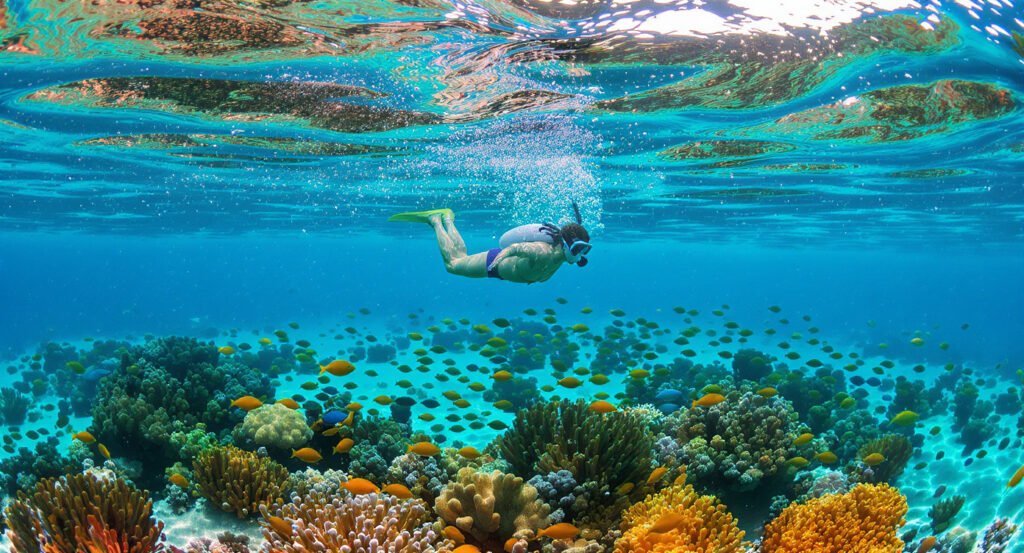
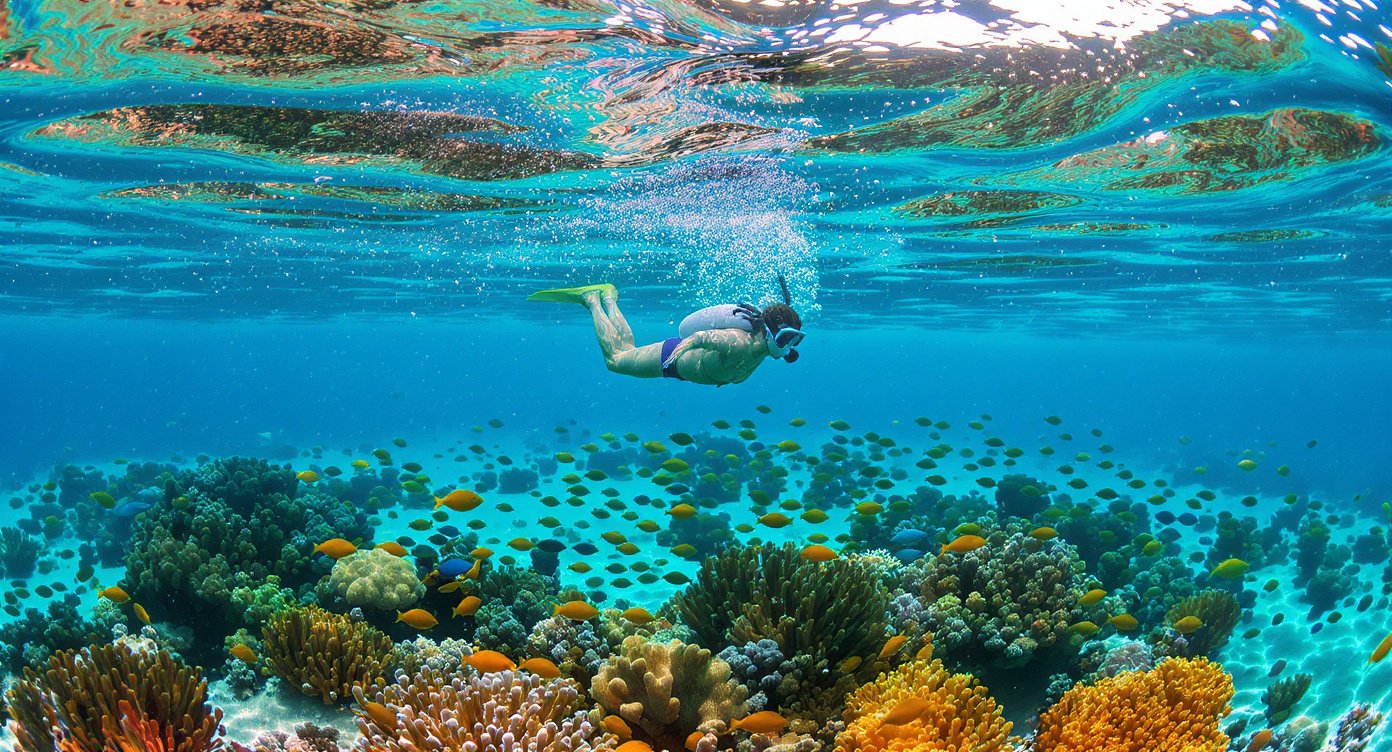
You don’t need to dive to experience one of the best reefs on the planet.
Flores snorkelling puts you directly above manta rays at Manta Point, nose-to-shell with sea turtles at Siaba Besar, and floating over the fish-packed pinnacles of Batu Bolong — all from the surface, without a scuba licence, oxygen tank, or certification course. The reefs in Komodo National Park and the surrounding Flores waters are shallow enough, clear enough, and rich enough that a mask, snorkel, and fins is all the access you need.
This is the complete 2026 guide to Flores snorkelling: the best sites, what you will see at each, the best time to go, and how to book a trip from Labuan Bajo.
Why Flores Snorkelling Is Exceptional
The underwater world around Flores is extraordinary for reasons that go beyond good coral and clear water. Flores sits inside the Coral Triangle — the global epicentre of marine biodiversity, a patch of ocean between Indonesia, the Philippines, and Papua New Guinea that contains more species of reef fish and coral than anywhere else on Earth. Within the Coral Triangle, Komodo National Park is one of the richest pockets: over 1,000 species of fish and 260 species of reef-building coral have been recorded in the park’s waters.
The driver of this diversity is the meeting of two distinct ocean currents. Cold, nutrient-rich water pushes up from the deep Indian Ocean through the Sape Strait, meeting warmer Pacific water from the north. The resulting upwelling feeds a food chain that scales from microscopic plankton all the way up to oceanic manta rays — the largest ray species on Earth — which come to Manta Point specifically to feed and be cleaned. Snorkellers on the surface are positioned exactly at the interface of this system, which is why even without going deeper than a few metres you encounter life density that surprises experienced divers from other parts of the world.
Best Flores Snorkelling Spots
Manta Point (Karang Makassar)
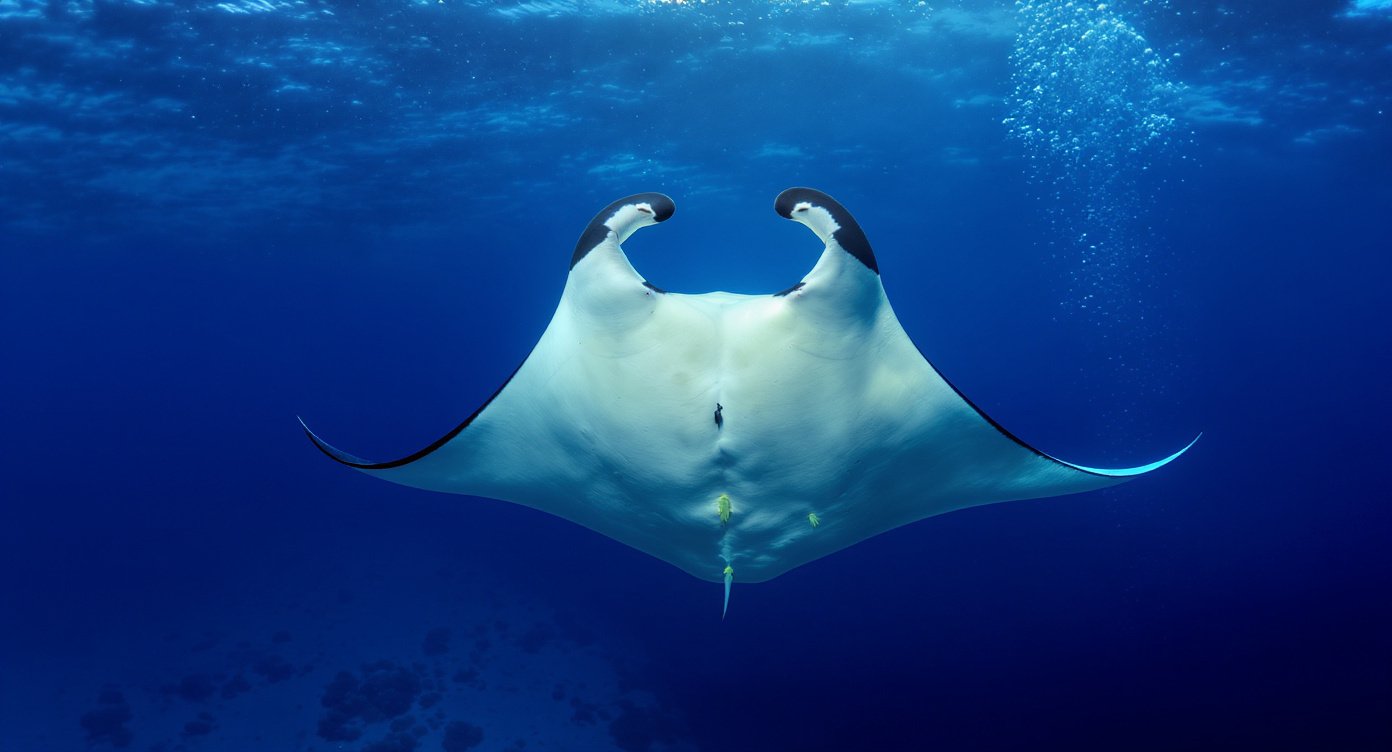
Manta Point is the single most compelling reason to put on a snorkel mask in Flores. Located in the channel between Komodo and Rinca islands, this shallow cleaning station is where oceanic manta rays (Mobula birostris) come to have parasites removed by small cleaner wrasse. During peak season, you can look down from the surface and watch mantas circling the cleaning station below — wingspans of three to four metres, moving through the current in slow, unhurried arcs.
The site is shallow enough for snorkellers. The cleaning station is typically at 5–12 metres depth, and the mantas regularly break the surface when feeding on plankton blooms. No dive skills required — float, look down, breathe normally.
Best time: June to November, peak manta activity July–September. Difficulty: Beginner — calm surface conditions most of the time.
Batu Bolong
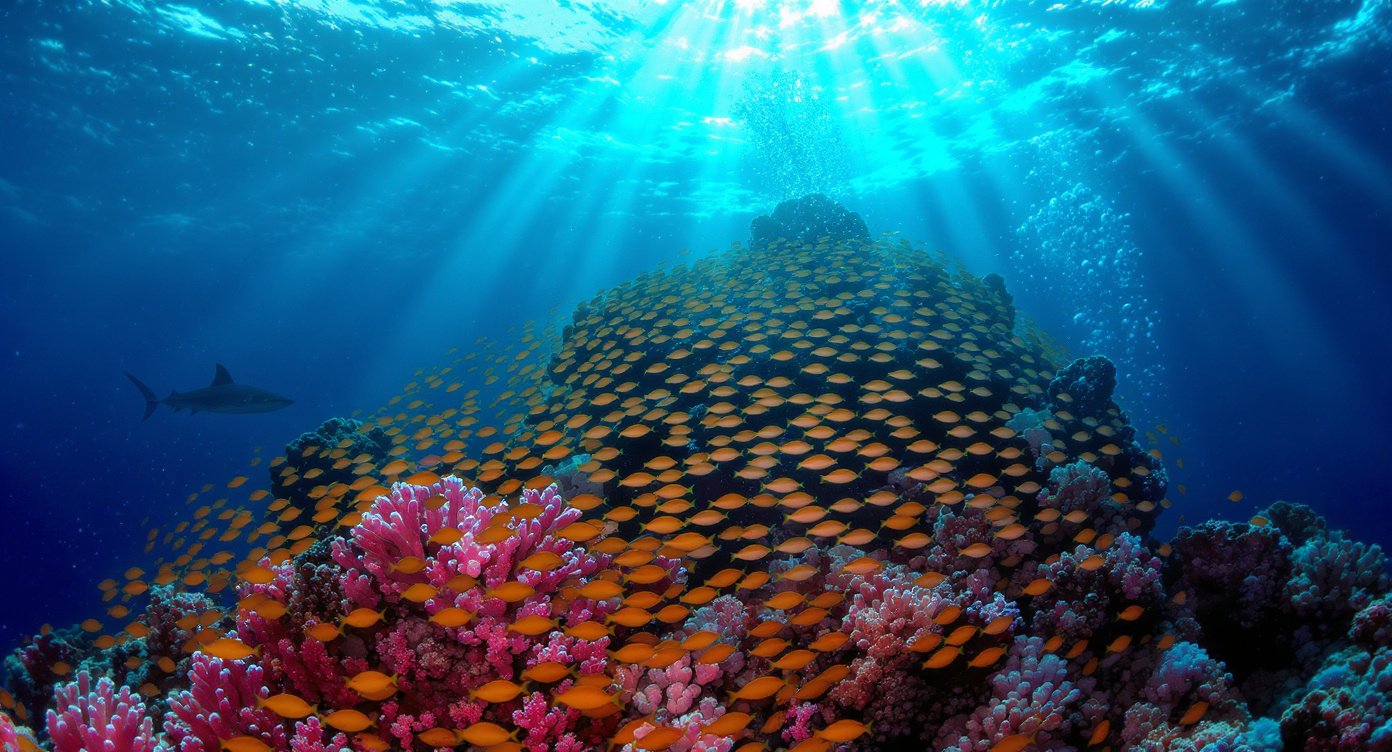
Batu Bolong is a small submerged rock pinnacle in the channel between Komodo and Tatawa Besar, and it is one of the most reliably spectacular snorkelling spots in Southeast Asia. The pinnacle rises from 40+ metres to just below the surface, and the current channelled around it concentrates marine life into a column of extraordinary density.
From the surface, you look down through a column teeming with hundreds of thousands of fish: orange and yellow anthias covering every surface of the reef, huge schools of fusiliers wheeling in formation, and white-tip reef sharks drifting in the current below. Every direction you look, there is more.
Best time: April to November, when visibility is highest. Difficulty: Intermediate — strong current requires confident snorkellers who can fin purposefully.
Pink Beach (Pantai Merah), Komodo Island
The snorkelling off Pink Beach is where most day-trip visitors get their first Flores snorkel experience — and it sets a high bar. The reef begins almost at the waterline: clownfish in anemones, parrotfish carving bites from coral, blue-spotted stingrays resting in sandy patches, and Moorish idols catching the current. The bay is sheltered, making conditions consistently calm and ideal for less experienced snorkellers.
Best time: Year-round, best April–October for visibility. Difficulty: Beginner-friendly. Reef shoes recommended for entry.
Siaba Besar — The Turtle Hotspot
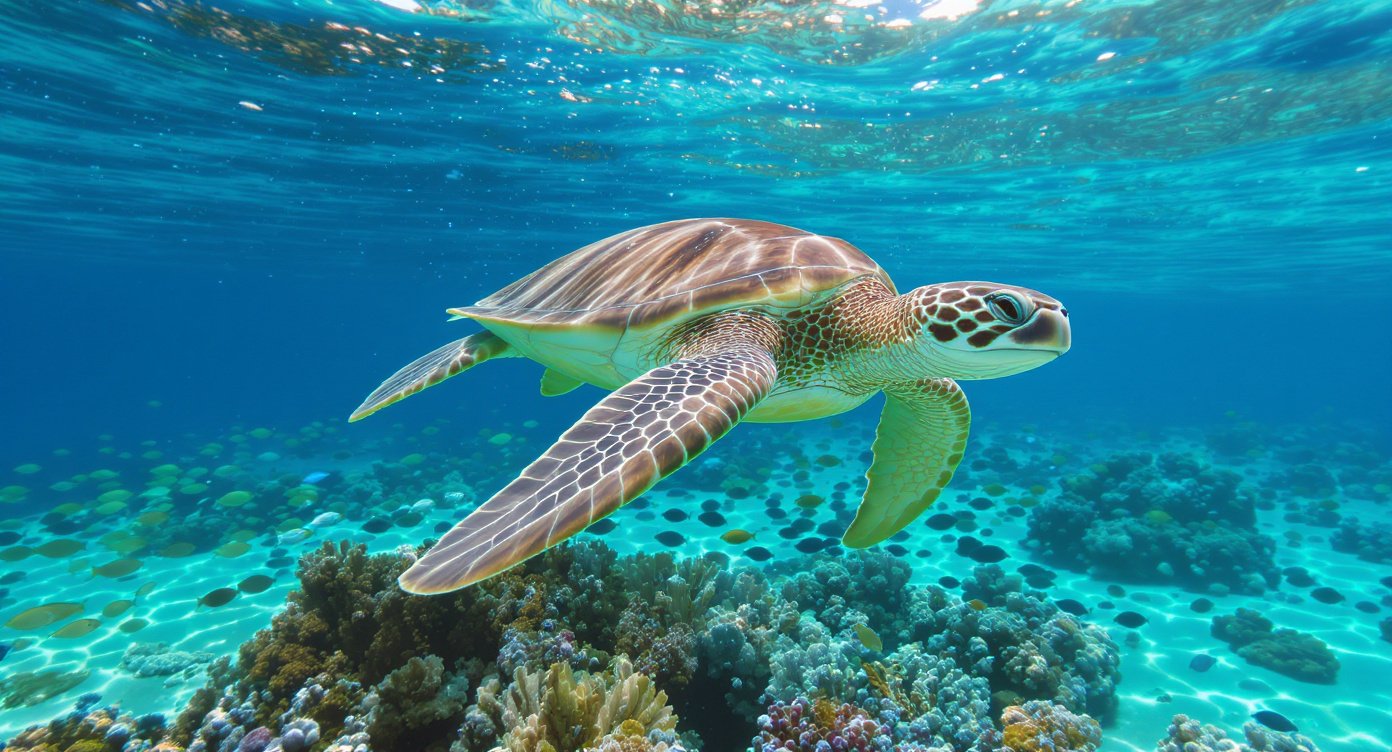
Siaba Besar is a small island east of Komodo in a sheltered bay, and it is the most reliable place to snorkel with green sea turtles (Chelonia mydas) in Komodo National Park. The turtles rest, graze on seagrass, and sleep on the reef here in unusual numbers — it is common to see three or four in a single 30-minute snorkel, close enough that you need to hold back to avoid disturbing them. The calm, protected conditions make it suitable for all abilities.
Best time: April–October. Turtles present year-round. Difficulty: Beginner — one of the most accessible Flores snorkelling sites in the park.
Kanawa Island
For visitors who want quality Flores snorkelling without a full-day Komodo tour, Kanawa Island is the answer. A small island 45 minutes by speedboat from Labuan Bajo, Kanawa has a house reef right off the beach — the closest quality snorkelling to the main town. Reef sharks visible in the sandy channels, hawksbill turtles passing through, and a vivid mix of damselfish, wrasse, and butterflyfish on the coral heads.
Best time: May–October. Difficulty: Beginner. The most accessible Flores snorkelling near Labuan Bajo.
Crystal Rock and Castle Rock
Two exposed rocks north of Gili Lawa Darat near the northern tip of Komodo Island, included on longer Komodo boat itineraries. Both have dramatic topography — steep drop-offs, strong current-driven fish concentrations, grey reef sharks, Napoleon wrasse (up to 2 metres), and large barracuda schools. Best for confident snorkellers comfortable in moving water.
Best time: May–October. Difficulty: Intermediate to advanced — significant currents.
Tatawa Besar
Tatawa Besar is known for spectacular soft corals — dense fields of pink, purple, and orange sea fans covering the reef wall. Calmer than Batu Bolong, more colourful at the macro level. Good for photographers, families, and those who prefer a more relaxed Flores snorkelling experience without managing significant current.
Best time: April–October. Difficulty: Beginner to intermediate.
Marine Life: What You Will See
- Manta rays — Oceanic mantas (Mobula birostris) with wingspans up to 5 metres. Most reliably seen at Manta Point June–November. Reef mantas (Mobula alfredi) seen year-round at several sites.
- Green sea turtles — Present at Siaba Besar, Kanawa, and Tatawa year-round. Hawksbill turtles also seen at most reef sites.
- White-tip reef sharks — Common at Batu Bolong, Crystal Rock, and Kanawa. Slow-moving and non-aggressive; they rest on sandy bottoms and drift in current channels.
- Napoleon wrasse — One of the largest reef fish in the world (up to 2 metres), present at several north Komodo sites. Distinctive blue-green colouring and humped forehead.
- Blue-spotted stingrays — Rest in sandy patches at almost every site. Beautifully patterned. Give them space and they will not move.
- Schools of reef fish — Anthias, fusiliers, surgeonfish, and parrotfish in densities among the highest documented on any reef. The volume of fish at Batu Bolong is unlike anywhere else most visitors have snorkelled.
Flores Snorkelling Without a Dive Licence
No certification required. Every site in this guide is accessible to snorkellers. While scuba diving reveals deeper terrain and different marine life, the shallow reefs here — typically 3–12 metres — deliver extraordinary encounters without any qualification.
The one practical consideration is current. Sites like Batu Bolong and Crystal Rock involve significant water movement. You don’t need dive skills, but you do need to be a confident swimmer who can fin purposefully against a current if needed. Most reputable operators assess conditions before entry and keep a safety boat deployed at all times.
If you want to explore deeper after experiencing the surface, a PADI Open Water course takes three days and is available in Labuan Bajo. But it is entirely optional for the Flores snorkelling experience described in this guide.
Best Time for Flores Snorkelling
April–October (dry season) is the optimal window for all Flores snorkelling sites. Visibility is highest (often 20–30 metres), seas are calmer, and currents are most predictable. The best months are May, June, and September — excellent conditions, fewer crowds than peak July–August.
June–November is the peak window specifically for manta rays at Manta Point. If manta encounters are your priority, plan your Flores snorkelling trip around this window.
November–March (wet season): Most sites are still accessible, but rougher boat crossings, reduced visibility, and stronger-than-usual currents make the experience less comfortable. Not recommended for first-time snorkellers. For the full seasonal breakdown, see our best time to visit Flores guide.
How to Book a Flores Snorkelling Trip
All Flores snorkelling is boat-based — tours depart from Labuan Bajo harbour. Most Komodo day tours include 2–3 snorkel stops alongside the dragon trek (IDR 600,000–2,000,000 per person). Dedicated snorkel-focused itineraries visiting 3–4 sites per day are available from specialist operators and give significantly more time in the water.
What to look for in an operator: Quality snorkel gear (not decade-old leaky masks), a guide in the water alongside you, a safety boat deployed at current sites, and a pre-entry briefing on conditions.
Recommended snorkelling and dive operators from our Labuan Bajo directory:
- Komodo Snorkel — snorkel-specialist with dedicated multi-site routes
- Wicked Adventures Komodo — well-regarded for small group snorkel trips
- Red Whale Dive Komodo — dive centre running excellent guided snorkel tours
- Somer Dive Center Komodo — strong on guided snorkel instruction for beginners
For the broader Komodo tour landscape and how to combine snorkelling with the dragon experience, see our Komodo Island vs Rinca Island guide and our Labuan Bajo travel guide.
What to Bring for Flores Snorkelling
- Your own mask and snorkel — a well-fitting mask makes an enormous difference. Test the seal before leaving the dock: wet your face, press the mask without the strap, inhale through your nose. If it holds, you are good.
- Fins — most operators provide them; confirm in advance.
- Reef-safe sunscreen — mineral-based (zinc oxide) only. Regular sunscreen damages coral; many Komodo operators specifically request reef-safe products.
- Rash guard or UV shirt — long-sleeved protection against sun and incidental coral contact.
- Waterproof camera — manta rays at Manta Point, turtles at Siaba Besar, fish clouds at Batu Bolong. A waterproof compact or phone housing earns its place on this trip.
- Water and snacks from Labuan Bajo — nothing available at sea.
Practical Tips
Follow the current, don’t fight it. At high-current sites like Batu Bolong, drift snorkelling is the correct technique — let the current move you along the reef while finning for position. Fighting upstream exhausts you fast. Signal the boat and let it reposition you.
Never touch marine life or coral. Manta rays that accept hand-feeding lose their fear response and become vulnerable to boat strikes. Touched coral dies. The extraordinary Flores snorkelling experience at every site here depends on the ecosystem remaining intact.
Confirm what’s included before booking. Ask: Does the price include snorkel gear? Park entrance fee? How many water stops? How long at each site? Quality varies enormously between operators at similar price points.
Book park days before booking flights. Komodo National Park operates a 1,000-visitor daily cap. Peak-season dates (July–August) sell out weeks in advance. Secure your Komodo snorkelling days first, then build your flights around them.
Frequently Asked Questions
Is Flores snorkelling good for beginners?
Yes — several sites are genuinely beginner-friendly. Pink Beach, Siaba Besar, and Kanawa Island all have calm conditions, shallow reefs, and extraordinary marine life accessible to first-time snorkellers. Batu Bolong and Crystal Rock require more confidence due to currents.
Can you see manta rays snorkelling in Flores?
Yes. Manta Point (Karang Makassar) is one of the most reliable manta ray snorkelling sites in the world. Oceanic mantas circle cleaning stations at 5–12 metres and regularly break the surface to feed on plankton. Peak season June–November.
Do I need a scuba licence for Flores snorkelling?
No. All sites in this guide are accessible from the surface without any certification. Confident swimming ability is sufficient for most sites; current-swept sites like Batu Bolong require stronger swimming skills but no dive qualification.
How much does a Flores snorkelling trip cost?
Budget group day tours IDR 600,000–900,000 per person. Mid-range tours with quality gear and guide: IDR 1,200,000–2,000,000. Dedicated multi-site snorkel trips: IDR 1,500,000–2,500,000. Private speedboat charters: IDR 3,000,000–6,000,000 per boat.
What is the best Flores snorkelling site?
Depends on your priority: Manta Point for manta rays. Siaba Besar for sea turtles. Batu Bolong for sheer fish density. Pink Beach for beginners and beach. Kanawa Island for easiest access from Labuan Bajo.
When is the best time to snorkel in Flores?
May–October for the best overall Flores snorkelling conditions. June–November specifically for manta rays at Manta Point. July and August are peak season with the most reliable weather but the most visitors; May and September–October offer excellent conditions with smaller crowds.
Flores snorkelling is genuinely among the best in the world — and the bar for experiencing it is a mask and the ability to swim. Whether you are floating above mantas at Manta Point or watching a turtle cruise past at Siaba Besar, the access is remarkable.
Browse our Labuan Bajo snorkelling operator directory to find a trip that matches your group size and budget, or contact our team for personalised recommendations. For those who want to go deeper, read our full Flores diving guide.

Author: Flores Insider
Welcome to Discover Flores — your trusted guide to exploring Indonesia’s untamed island paradise. From Komodo National Park and Kelimutu’s tri-colored lakes to hidden beaches, dive spots, and Labuan Bajo real estate opportunities, Discover Flores brings you the best of travel, lifestyle, and investment across the island. Plan your next adventure, find the top tours and accommodations, and uncover why Flores is Indonesia’s rising gem for eco-tourism, digital nomads, and sustainable travel.