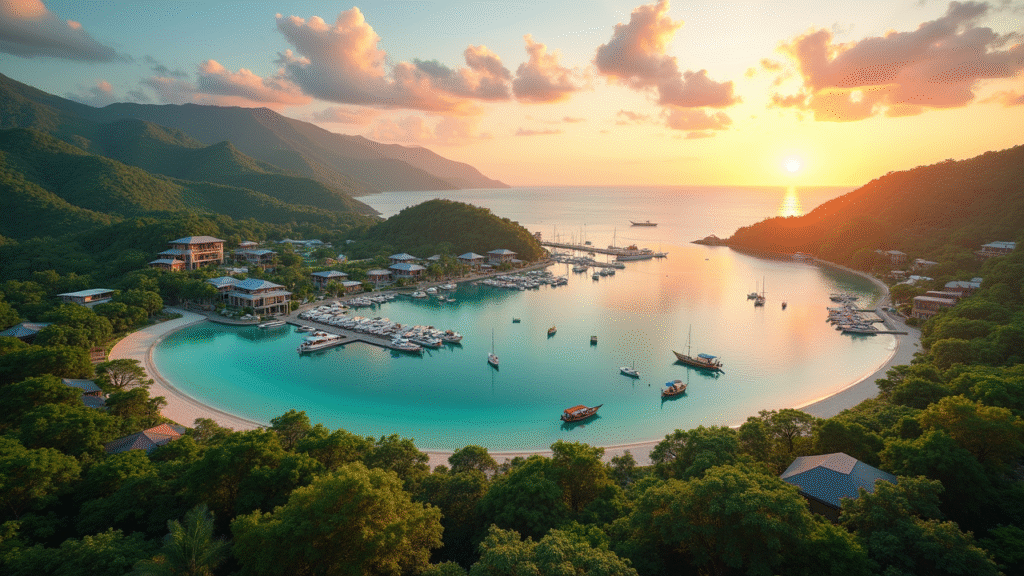
Why Flores Real Estate Investment Is the Smart Choice in 2026
Flores real estate investment has crossed a threshold. For years, this island sat on the radar of a small group of well-connected investors who knew what was coming. In 2026, the signals are no longer subtle — they are structural. A new international airport terminal, direct flights from Jakarta launching in March 2026, a government super-priority destination mandate, and a tourism market that grew over 30% year-on-year have collectively moved Flores from “emerging opportunity” to “active market.”
The window for below-market entry is narrowing. This guide breaks down the market fundamentals, the best investment areas, the legal framework for foreign buyers, and realistic return projections — without the promotional hype that often surrounds emerging property markets.
Note: This article provides general information only. All property investment carries risk. Consult a qualified Indonesian property lawyer and financial adviser before making any investment decision.
The Flores Property Market in 2026: Where Things Stand
Labuan Bajo — the gateway to Komodo National Park and the island’s primary tourism hub — has been the focal point of Flores real estate investment activity. Land prices in key coastal areas have increased significantly since 2020, driven by a combination of government infrastructure spending and rapidly rising tourist arrivals.
In March 2026, direct Jakarta–Labuan Bajo flights launched with Garuda and TransNusa, cutting travel time to under two hours and dramatically expanding the accessible visitor base. Domestic tourism — historically underdeveloped in Flores — is now a meaningful demand driver alongside international arrivals.
Key market indicators as of Q1 2026:
- Tourist arrivals: Flores received over 1.2 million international visitors in 2025, up from approximately 900,000 in 2023
- Hotel occupancy: Premium properties in Labuan Bajo averaging 65–80% occupancy during dry season (May–October)
- Land prices: Beachfront land near Labuan Bajo now commanding IDR 3–8 billion per are in prime locations, up from IDR 1–2 billion in 2021
- New developments: Over 15 significant resort and hospitality projects currently under development or recently completed in the Labuan Bajo area
Labuan Bajo has formally emerged as a billion-dollar investment hub, with domestic and international capital increasingly active across hospitality, retail, and residential categories.
The Government Development Mandate: Why This Changes the Equation
The Indonesian government’s designation of Labuan Bajo as one of five “Super Priority Destinations” (alongside Lake Toba, Borobudur, Mandalika, and Likupang) is not a marketing exercise — it is a multi-billion rupiah infrastructure commitment with direct implications for property values.
Since the Super Priority designation, Labuan Bajo has received:
- Airport upgrade: Komodo Airport (LBJ) upgraded to international standard with expanded terminal capacity
- New cruise terminal: Bita Port developed specifically to handle large cruise vessels, adding a new visitor category
- Road infrastructure: The approach roads into Labuan Bajo and key tourist corridors have been widened and resurfaced
- Utilities: Expanded electricity capacity and water infrastructure supporting larger-scale developments
- Port development: Marina and port upgrades enabling a growing liveaboard and sailing tourism sector
The government has committed to continued infrastructure investment through 2029. Infrastructure spending at this scale typically precedes — rather than follows — property price appreciation. Investors who enter during the infrastructure phase historically benefit most from subsequent growth.

Tourism Growth Projections: The Demand Foundation
Flores real estate investment thesis rests fundamentally on tourism demand. Without a robust and growing visitor base, hospitality and short-term rental returns do not materialise.
The current trajectory is strong:
2025 Performance:
- Komodo National Park exceeded 200,000 visitor permits in 2025, its highest recorded figure
- Direct flight routes from Singapore, Kuala Lumpur, and Darwin operate seasonally
- The new Jakarta–Labuan Bajo direct route (March 2026) is projected to add 80,000–120,000 additional domestic visitors annually
2026–2030 Projections:
- Government target: 500,000 international visitors annually to Labuan Bajo by 2028
- Komodo National Park implementing managed visitor limits — a mechanism that restricts supply of low-cost tour operators while supporting premium pricing
- Sustainable tourism development frameworks are being formalised, which should improve the long-term quality and longevity of the tourism market
The Komodo National Park visitor limit policy is particularly significant for investors. By capping visitor numbers and eliminating budget operators, the park is effectively positioning itself as a premium destination — which supports higher nightly rates and better-quality clientele for accommodation providers.
Best Investment Areas in Flores
Not all Flores real estate investment carries equal opportunity. The market is highly localised, and the right area depends on investment horizon, budget, and intended use.
Labuan Bajo — Primary Investment Zone
The core market, and the most liquid. Specific Labuan Bajo hotspot areas include:
Waecicu Beach Area: The established premium coastal zone. Beachfront land is expensive (IDR 5–8 billion per are) but commands the highest nightly rates and has the most development activity. Best for investors with larger budgets seeking hospitality or villa development.
Long Beach (Pantai Panjang): Less developed, longer stretches of coastal land, lower entry price point (IDR 1.5–3.5 billion per are). Strong medium-term appreciation potential as infrastructure extends outward from central Labuan Bajo.
Seraya Island & Surrounds: Smaller islands near Labuan Bajo are attracting boutique resort developers. More complex logistics and higher development costs, but near-zero competition and a premium pricing environment.
Central Labuan Bajo (townside): Commercial real estate and mixed-use. Higher daily footfall, suitable for F&B, co-working, retail, and serviced accommodation.
Central & East Flores — Long-Horizon Opportunity
Areas like Bajawa, Ruteng, and Ende currently sit at the early stage of the tourism development curve. Land prices are low (IDR 100–500 million per are in most areas), visitor numbers are growing from a small base, and infrastructure is improving incrementally.
For patient capital with a 5–10 year horizon, central and east Flores offers the risk/reward profile that Labuan Bajo offered in 2015–2018. The caveat: exit liquidity is low, and development timelines can be extended.
Legal Framework for Foreign Investment
The most common question from foreign investors in the Flores real estate market: can foreigners actually own land in Indonesia?
The short answer: not directly. The longer answer: with the right structure, foreigners can hold effective property rights through legally recognised mechanisms.
Key legal structures:
PT PMA (Foreign-Owned Limited Liability Company): A foreign investor establishes an Indonesian company with foreign ownership (up to 100% in most property/tourism sectors following Indonesia’s 2021 investment law reforms). The company holds the Hak Guna Bangunan (HGB — Right to Build) title. This is the most legally sound structure for development projects.
Hak Guna Bangunan (HGB): A 30-year right to build and use land, renewable for a further 20 years, and potentially extendable. HGB is held by the PT PMA company. This is the standard title used for commercial hospitality development.
Hak Pakai (Right to Use): Foreigners resident in Indonesia can hold Hak Pakai directly — a 25-year use right over land. Less commonly used for investment purposes but available for personal-use property.
Nominee arrangements: Some older-style investments used an Indonesian citizen nominee to hold the SHM (full freehold) title on behalf of a foreign investor. This is legally risky and not recommended — Indonesian courts have repeatedly ruled these arrangements are unenforceable and the Indonesian nominee retains the real legal title.
Recommended process:
1. Engage a qualified Indonesian notary (Notaris/PPAT) with specific experience in foreign investment property transactions
2. Establish PT PMA via BKPM (Indonesia’s investment agency) — process typically takes 4–8 weeks
3. Conduct land due diligence: verify BPN (National Land Agency) records, confirm no disputes, check zoning compliance
4. Complete purchase via the notary with full documentation
Budget IDR 50–150 million for legal and notary fees on a standard transaction. This is not the place to cut costs.
ROI Potential: Realistic Projections
Flores real estate investment returns vary significantly by asset type, location, and management quality. Here are realistic benchmarks based on current market conditions:
Short-term rental / villa:
- Gross rental yield: 8–15% per annum in Labuan Bajo (well-managed properties in prime locations)
- Occupancy during dry season (May–October): 70–90%
- Occupancy during wet season (November–April): 25–45%
- Premium villas with private pools near Labuan Bajo achieving USD 200–500/night in peak season
Boutique resort / eco-lodge:
- Higher capital requirement, higher return potential
- Luxury resort investment projections indicate 12–18% gross yields for well-positioned boutique properties
- Development costs: IDR 5–20 billion+ depending on scale and specification
Land banking:
- Land in Labuan Bajo’s growth corridors has appreciated 3–5x in nominal IDR terms since 2018
- Lower bound estimate for next 5 years: 50–100% appreciation in prime areas
- Risk: liquidity is low, exit takes time, and specific area selection matters enormously
Commercial / F&B:
- Labuan Bajo’s restaurant and retail sector is growing rapidly with the tourism boom
- Entry-level F&B investment: IDR 500 million–2 billion for fit-out and equipment
- Returns vary widely based on location, concept, and operator quality
Key Risks to Understand
Responsible Flores real estate investment requires understanding the downside as clearly as the upside:
- Liquidity risk: This is not a liquid market. Selling a property in Labuan Bajo can take 6–24 months. Do not invest capital you may need to access quickly.
- Regulatory risk: Indonesia’s property laws for foreigners continue to evolve. Policy changes can affect ownership structures.
- Development risk: Infrastructure projects can be delayed. Do not assume an access road or utility upgrade will be completed on schedule.
- Management dependency: Short-term rental yields depend heavily on management quality. Absentee investors without strong local management often underperform projections.
- Seasonality: Revenue is heavily concentrated in the dry season. Cash flow modelling must account for low-season costs.
Is Flores Real Estate Investment Right for You?
Flores offers a compelling combination: genuine government backing, a proven and growing tourism market, affordable entry relative to comparable Asian resort destinations, and a legal framework that — when followed correctly — protects foreign investors.
The investors best positioned to benefit are those with:
- A 3–7 year minimum investment horizon
- Capital they do not need liquidity on in the short term
- Budget to engage proper legal and management support
- Interest in the tourism economy, not just passive land banking
Explore the full Flores island guide to understand the destination you’d be investing in — because understanding the tourism product is inseparable from understanding the investment case.
If you’re planning a visit to Flores to assess opportunities firsthand, contact our team to arrange a combined exploration and site visit trip.
Disclaimer: This article is for general informational purposes only and does not constitute financial, legal, or investment advice. Property investment carries significant risk. Consult qualified legal and financial professionals before making any investment decisions.

Author: Flores Insider
Welcome to Discover Flores — your trusted guide to exploring Indonesia’s untamed island paradise. From Komodo National Park and Kelimutu’s tri-colored lakes to hidden beaches, dive spots, and Labuan Bajo real estate opportunities, Discover Flores brings you the best of travel, lifestyle, and investment across the island. Plan your next adventure, find the top tours and accommodations, and uncover why Flores is Indonesia’s rising gem for eco-tourism, digital nomads, and sustainable travel.







One response to “Why Flores Real Estate Investment Is the Smart Choice in 2026”
[…] is not a reason to avoid foreign property investment in Flores — it is a reason to do it […]