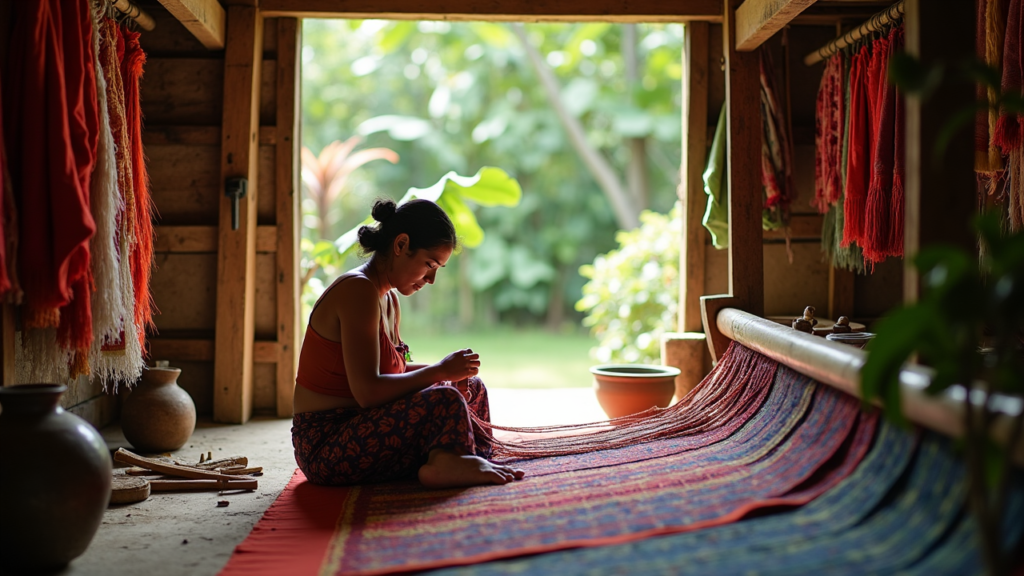
Flores, an island in Indonesia’s East Nusa Tenggara province, stands as one of Southeast Asia’s most vibrant centers for traditional textile arts and handicrafts. For travelers seeking authentic cultural experiences beyond typical tourist souvenirs, Flores offers an unparalleled opportunity to engage with centuries-old weaving traditions and support communities that have preserved their ancestral crafts through generations. This comprehensive guide helps visitors navigate the island’s rich artisan landscape while making informed, culturally respectful purchasing decisions.
Ikat Weaving Traditions
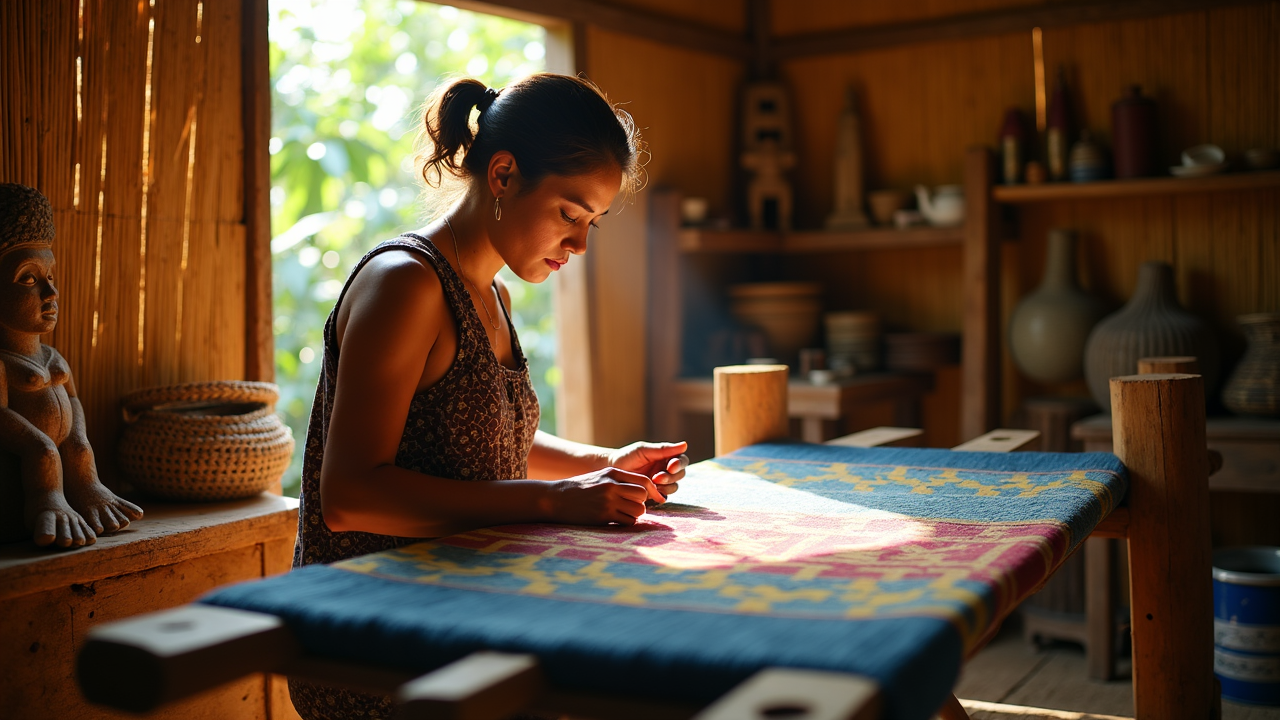
The heart of Flores’ textile heritage lies in its ikat weaving tradition, a complex technique where threads are resist-dyed before weaving to create intricate patterns. Unlike printed fabrics, authentic Flores ikat requires months of meticulous work, with artisans binding and dyeing threads multiple times to achieve the characteristic blurred-edge designs that distinguish genuine ikat from imitations.
Each region of Flores maintains distinct ikat styles that reflect local cultural identity. The Ngada people of central Flores are renowned for their geometric patterns featuring ancestral motifs and symbolic representations of their cosmology. In Sikka regency, weavers create elaborate floral and animal designs using natural dyes derived from indigo, morinda root, and turmeric. The Ende region produces ikat with distinctive earth tones and traditional ship motifs that reference the area’s maritime heritage.
Traditional ikat production follows time-honored methods passed down through female lineages. Natural dyes require extensive preparation—indigo fermentation can take weeks, while certain red dyes demand repeated applications over months to achieve deep, lasting color. The weaving itself occurs on backstrap looms, with weavers working from memory to align pre-dyed threads into coherent patterns. A single high-quality ikat sarong may represent 3-6 months of labor, explaining the significant price difference between authentic pieces and mass-produced alternatives.
Best Shopping Locations
Flores offers diverse shopping venues, each providing different experiences and price points for textile and handicraft purchases. Understanding these options helps travelers make informed decisions aligned with their interests and budgets.
Village cooperatives and weaving centers provide the most direct connection to artisans. In Wolotopo and Wologai villages near Maumere, visitors can watch weavers at work and purchase directly from producers, ensuring maximum financial benefit reaches the craftspeople. These locations typically offer authentic pieces at fair prices, though selection may be limited compared to commercial outlets.
Maumere’s central market features numerous textile vendors offering both locally-produced ikat and pieces from across the region. While prices are generally negotiable, quality varies significantly, requiring careful inspection. The market atmosphere provides cultural immersion but demands more discernment from buyers unfamiliar with authentic ikat characteristics.
Ende’s waterfront area hosts several established textile shops specializing in traditional ikat from central Flores. These businesses often work directly with weaving villages and can provide provenance information for their inventory. Prices reflect the curated selection and established reputation, but quality assurance is typically higher than market purchases.
Labuan Bajo, as Flores’ primary tourist hub, offers the widest selection of handicrafts and textiles in concentrated shopping areas. However, this convenience comes with caveats—many shops stock mass-produced items alongside authentic pieces, and prices often include significant tourist markups. Discerning shoppers can still find quality items, but careful evaluation is essential.
Traditional Handicrafts
Beyond textiles, Flores artisans produce diverse handicrafts that reflect the island’s cultural richness and natural resources. These items offer travelers additional opportunities to acquire meaningful souvenirs while supporting traditional skills.
Woodcarving traditions vary by region, with the Ngada people creating distinctive ancestral figures and ceremonial objects. Contemporary artisans also produce decorative items including masks, bowls, and sculptures that blend traditional motifs with modern aesthetics. Sandalwood carving, particularly in the Ende region, produces fragrant decorative pieces and practical items like combs and boxes.
Basketry and palm-leaf weaving remain important household crafts across Flores. Artisans create functional items including storage baskets, mats, and traditional containers using techniques refined over generations. While less expensive than textiles, these pieces demonstrate sophisticated craftsmanship and provide practical souvenirs.
Beadwork and jewelry-making incorporate traditional designs using materials ranging from seeds and shells to silver and semi-precious stones. Many pieces carry cultural significance, originally serving as ceremonial adornments or status symbols. Contemporary artisans adapt these traditions for modern wear while maintaining connection to ancestral designs.
Pottery production continues in several Flores communities, with distinctive styles reflecting local clay sources and firing techniques. Traditional vessels for ceremonial use and daily life demonstrate forms unchanged for centuries, while some potters experiment with contemporary designs for the tourist market.
Featured Ikat Weaving Workshops
Authentic vs Tourist Items
Distinguishing authentic traditional crafts from mass-produced tourist items requires knowledge and careful observation. This skill protects travelers from overpaying for inferior goods while ensuring their purchases genuinely support traditional artisans.
Authentic ikat displays characteristic features that reveal hand production. The pattern edges show slight blurring where dyed threads shift during weaving—perfectly crisp patterns indicate printing rather than true ikat. Natural dyes produce subtle color variations and softer tones compared to the harsh, uniform colors of synthetic dyes. Hand-woven fabric has slight irregularities in thread tension and spacing, while machine-woven textiles show mechanical precision.
Price provides important clues about authenticity. Genuine hand-woven ikat using natural dyes cannot be produced cheaply—pieces priced significantly below market rates likely involve shortcuts in materials or technique. However, extremely high prices don’t guarantee authenticity, particularly in tourist-focused shops where markups may be substantial.
Provenance information helps verify authenticity. Reputable sellers can identify the weaving village, approximate age, and specific patterns of their textiles. They may offer to connect buyers with artisans or provide documentation of origin. Reluctance to discuss these details suggests questionable sourcing.
Physical inspection reveals production methods. Natural-dyed textiles smell earthy and organic, while synthetic dyes often have chemical odors. Hand-spun thread shows slight variations in thickness; machine-spun thread maintains uniform diameter. Examining fabric edges and selvages can reveal whether pieces were woven on traditional backstrap looms or modern equipment.
Supporting Local Artisans
Thoughtful purchasing decisions directly impact Flores’ artisan communities, influencing whether traditional crafts remain viable livelihoods or disappear under economic pressure. Travelers can maximize their positive impact through informed shopping practices.
Buying directly from weavers or village cooperatives ensures the highest percentage of purchase price reaches artisans. While this may require additional travel to weaving villages, the cultural exchange and economic benefit justify the effort. Many villages welcome visitors and provide opportunities to observe production processes, deepening appreciation for the crafts.
Fair pricing benefits both buyers and sellers. Excessive bargaining on already-reasonable prices undermines artisan livelihoods, while paying inflated tourist prices without negotiation perpetuates exploitative pricing structures. Research typical price ranges before shopping, and negotiate respectfully toward fair middle ground.
Commissioning custom pieces provides premium income for artisans while allowing travelers to acquire unique items reflecting personal preferences. Many weavers accept commissions for specific patterns, colors, or sizes, though production timelines of several months require advance planning and shipping arrangements.
Sharing information about authentic sources helps other travelers make informed purchases while directing economic benefits to legitimate artisans. Social media posts, travel blogs, and review platforms can highlight ethical vendors and weaving villages, creating positive incentives for quality and authenticity.
Cultural Significance
Understanding the cultural context of Flores textiles and handicrafts transforms shopping from mere souvenir acquisition into meaningful cultural engagement. These objects carry deep significance within their communities of origin, representing identity, history, and spiritual beliefs.
Traditional ikat patterns encode cultural knowledge and social information. Specific motifs indicate clan affiliation, social status, and ceremonial purpose. Certain patterns remain restricted to particular families or occasions, though artisans increasingly create modified versions for commercial sale. Recognizing this significance encourages respectful appreciation rather than casual consumption.
Textiles play central roles in Flores ceremonial life, marking major life transitions including birth, marriage, and death. Wedding exchanges involve elaborate ikat pieces that formalize family alliances and demonstrate wealth. Funeral ceremonies require specific textiles to honor the deceased and facilitate spiritual transition. Understanding these contexts reveals why certain pieces command high prices—they represent not just labor but cultural capital.
The preservation of traditional crafts faces ongoing challenges as younger generations pursue modern education and employment. Tourism provides crucial economic incentive for maintaining these skills, but only when travelers prioritize authentic, fairly-priced items over cheap imitations. Each purchase represents a vote for cultural preservation or its erosion.
Women’s roles as primary textile producers give them economic agency and cultural authority within traditionally patriarchal societies. Supporting female artisans through direct purchases strengthens women’s economic position and validates their cultural contributions. Many weaving cooperatives explicitly focus on women’s economic empowerment through craft production.
As Flores’ tourism industry continues developing, the tension between cultural preservation and commercial adaptation will intensify. Travelers who educate themselves about authentic traditions, purchase thoughtfully, and engage respectfully with artisan communities contribute to outcomes that honor Flores’ cultural heritage while providing sustainable livelihoods for its people. The textiles and handicrafts visitors carry home become not just beautiful objects but tangible connections to living cultural traditions and the skilled hands that created them.
Essential Questions About Flores Traditional Textiles and Handicrafts
1. What makes Flores ikat textiles unique compared to other Indonesian weaving traditions?
Flores ikat is distinguished by its resist-dyeing technique where threads are dyed before weaving, creating characteristic blurred-edge patterns. Each region maintains distinct styles—Ngada geometric ancestral motifs, Sikka floral designs with natural dyes, and Ende earth-toned ship patterns. Authentic pieces require 3-6 months of labor using traditional backstrap looms and natural dyes like indigo and morinda root, passed down through female lineages for generations.
2. Where should travelers shop for authentic textiles and handicrafts in Flores?
Village cooperatives in Wolotopo and Wologai near Maumere offer direct purchases from weavers at fair prices. Ende’s waterfront shops provide curated selections with provenance information. Maumere’s central market offers cultural immersion but requires careful quality inspection. Labuan Bajo has the widest selection but includes many mass-produced items with tourist markups, demanding discerning evaluation.
3. How can visitors distinguish authentic ikat from mass-produced imitations?
Authentic ikat shows slight pattern blurring from hand-dyeing, subtle color variations from natural dyes, and minor irregularities in thread tension. Natural-dyed textiles have earthy organic scents versus chemical odors. Hand-spun threads vary in thickness, while machine-spun threads are uniform. Genuine pieces cannot be produced cheaply—suspiciously low prices indicate shortcuts. Reputable sellers provide weaving village origins and pattern information.
4. What other traditional handicrafts besides textiles are available in Flores?
Flores artisans produce diverse handicrafts including Ngada woodcarvings of ancestral figures and ceremonial objects, sandalwood carvings from Ende, basketry and palm-leaf weaving for functional items, beadwork and jewelry using seeds, shells, and silver with ceremonial significance, and traditional pottery with distinctive regional styles reflecting local clay sources and firing techniques unchanged for centuries.
5. How does purchasing traditional crafts support Flores communities and cultural preservation?
Direct purchases from weavers and village cooperatives maximize economic benefits to artisans, particularly women who gain economic agency through textile production. Fair pricing sustains traditional crafts as viable livelihoods against pressure from modern employment. Tourism provides crucial economic incentive for younger generations to maintain ancestral skills. Each thoughtful purchase supports cultural preservation, women’s empowerment, and living traditions that encode centuries of cultural knowledge.
Author: Flores Insider
Welcome to Discover Flores — your trusted guide to exploring Indonesia’s untamed island paradise. From Komodo National Park and Kelimutu’s tri-colored lakes to hidden beaches, dive spots, and Labuan Bajo real estate opportunities, Discover Flores brings you the best of travel, lifestyle, and investment across the island. Plan your next adventure, find the top tours and accommodations, and uncover why Flores is Indonesia’s rising gem for eco-tourism, digital nomads, and sustainable travel.




One response to “Traditional Textiles and Handicrafts: Flores’ Cultural Shopping Guide”
[…] ritual follows Catholic liturgical traditions, elements reflect indigenous practices: the use of traditional textiles, the incorporation of local musical instruments alongside church organs, and the communal feast […]