In the remote highlands and valleys of Flores, Indonesia, traditional villages stand as living museums where ancient customs, architectural marvels, and ceremonial practices continue to thrive. For experiential travelers and cultural enthusiasts seeking authentic connections beyond conventional tourism, these communities offer profound insights into indigenous ways of life that have endured for centuries. The traditional villages of Flores represent more than picturesque destinations—they are guardians of cultural heritage, repositories of ancestral wisdom, and vibrant communities navigating the delicate balance between preservation and modernization.
As cultural tourism gains momentum globally, Flores’ traditional villages have emerged as compelling alternatives to mass-market destinations. These communities invite visitors to witness daily rituals, participate in age-old ceremonies, and understand architectural traditions that reflect deep spiritual connections to the land. This immersive approach to travel creates meaningful exchanges that benefit both visitors seeking authenticity and communities striving to maintain their cultural identity while generating sustainable livelihoods.
Wae Rebo Village: The Cloud-Wrapped Settlement
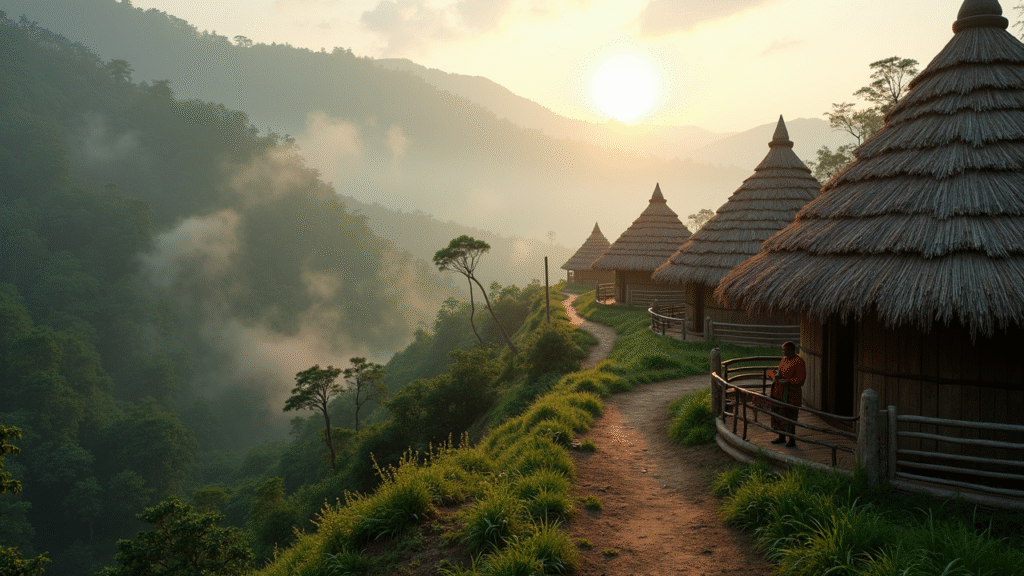
Perched at 1,200 meters above sea level in the mountains of western Flores, Wae Rebo village represents one of Indonesia’s most remarkable examples of living cultural heritage. Accessible only by a challenging three-hour trek through dense forest, this isolated settlement consists of seven traditional cone-shaped houses called Mbaru Niang, which serve as both architectural wonders and symbols of communal living.
The village’s remote location has paradoxically become its greatest asset for cultural preservation. The journey to Wae Rebo requires physical commitment, naturally limiting visitor numbers and ensuring that those who arrive are genuinely interested in cultural exchange rather than casual sightseeing. Each Mbaru Niang houses multiple families across five levels, with specific functions assigned to each floor—from living spaces to storage areas for seeds and offerings to ancestors.
Visitors to Wae Rebo participate in a homestay program that immerses them in daily village life. Guests sleep in the traditional houses, share meals prepared using ancestral methods, and engage in activities such as coffee processing, weaving, and agricultural work. The village has implemented a community-based tourism model where entrance fees and accommodation costs directly support the approximately 1,200 residents, funding education, infrastructure improvements, and cultural preservation initiatives.
Bena Traditional Village: Stone Monuments and Ancestral Connections
Located in the Ngada regency of central Flores, Bena village showcases a different architectural tradition while maintaining equally strong cultural practices. The village is characterized by its distinctive layout featuring traditional thatched-roof houses arranged around a central plaza dominated by megalithic structures—stone altars called Ngadhu (male symbols) and miniature houses called Bhaga (female symbols) that represent ancestral spirits and clan identities.
Bena’s approximately 300 residents belong to nine different clans, each maintaining their own Ngadhu and Bhaga pairs. These megalithic monuments serve as focal points for ceremonial activities and represent the continuing relationship between the living and their ancestors. The village’s elevated position offers panoramic views of surrounding valleys and Mount Inerie, creating a dramatic backdrop that enhances the spiritual atmosphere.
Unlike Wae Rebo’s overnight immersion model, Bena operates primarily as a day-visit destination, though this approach has both advantages and challenges. The accessibility allows more visitors to experience Ngada culture, generating broader economic benefits, but also requires careful management to prevent the village from becoming merely a photo opportunity. Local guides from the community provide context about clan systems, architectural significance, and ceremonial practices, transforming visits into educational experiences rather than superficial encounters.
Ngada Culture: Animist Traditions in a Modern World
The Ngada people, who inhabit the central highlands of Flores, maintain one of Indonesia’s most distinctive cultural systems, blending animist beliefs with elements introduced through centuries of external contact. Their worldview centers on Gae Dewa Musu Nitu—the concept of a supreme creator and ancestral spirits who continue to influence daily life and require regular offerings and ceremonies.
Ngada culture emphasizes reciprocal relationships: between humans and nature, living and dead, male and female principles. This philosophy manifests in agricultural practices that respect seasonal cycles, architectural designs that balance opposing forces, and social structures that prioritize collective welfare over individual gain. Understanding these underlying principles transforms village visits from tourism into genuine cultural education.
Traditional ceremonies remain central to Ngada life, including elaborate funeral rites, harvest celebrations, and house-building rituals that can span multiple days and involve entire communities. While some ceremonies remain private or restricted to clan members, others welcome respectful observers, offering visitors rare opportunities to witness authentic cultural practices. The challenge for communities lies in determining which aspects of their culture can be shared without compromising sacred traditions or reducing ceremonies to performances.
Traditional Architecture: Form, Function, and Spiritual Meaning
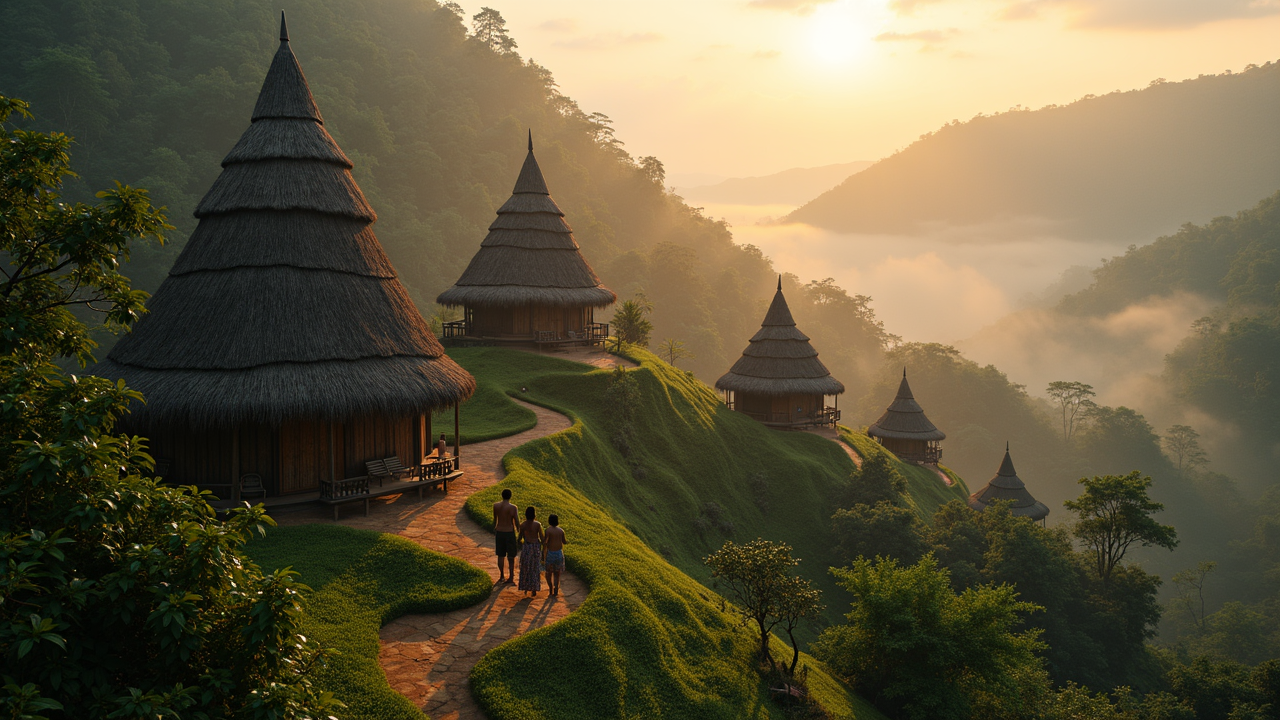
The traditional architecture of Flores villages represents sophisticated responses to environmental conditions, social organization, and spiritual beliefs. The Mbaru Niang houses of Wae Rebo, with their distinctive cone shapes rising up to 15 meters high, utilize a complex wooden framework covered with layers of lontar palm fiber that provides excellent insulation and water resistance. The construction requires specialized knowledge passed down through generations, with specific rituals accompanying each building phase.
In Bena and other Ngada villages, traditional houses feature high-pitched thatched roofs supported by wooden pillars, with interior spaces divided according to function and gender. The front veranda serves as a social space for receiving guests and conducting daily activities, while inner rooms remain private. Elevated granaries store rice and corn, protecting harvests from moisture and pests while symbolizing prosperity and ancestral blessings.
These architectural traditions face significant challenges as modern materials become more accessible and younger generations question the practicality of maintaining labor-intensive structures. Some villages have established regulations requiring traditional designs for houses visible from central areas, while allowing modern construction in peripheral zones. This compromise attempts to preserve visual cultural landscapes while accommodating contemporary needs, though debates continue about authenticity and adaptation.
Ceremonial Practices: Living Traditions and Tourist Participation
Ceremonial life in Flores traditional villages follows agricultural cycles, ancestral calendars, and life-stage transitions. Major ceremonies include Reba harvest festivals in Ngada areas, featuring ritual boxing matches, traditional dances, and communal feasting that strengthen social bonds and honor ancestral spirits. House-building ceremonies involve animal sacrifices, offerings, and multi-day celebrations that mark significant investments in family and community continuity.
The presence of tourists at ceremonies creates complex dynamics. On one hand, visitor interest validates cultural practices and provides economic incentives for continuation. Young people who might otherwise view traditions as outdated see renewed value when outsiders express genuine appreciation. On the other hand, the tourist gaze can alter ceremonial authenticity, with communities feeling pressure to perform rather than practice their culture organically.
Progressive villages have developed protocols for tourist participation in ceremonies, establishing clear guidelines about photography, appropriate behavior, and required contributions. Some ceremonies remain entirely closed to outsiders, preserving sacred spaces where cultural transmission occurs without external influence. This selective sharing allows communities to maintain control over their cultural narrative while benefiting from tourism revenue.
Sustainable Tourism: Balancing Preservation and Development
The traditional villages of Flores stand at a critical juncture where tourism presents both opportunities and threats. Sustainable cultural tourism models prioritize community control, equitable benefit distribution, and cultural integrity over maximum visitor numbers or profit extraction. Successful examples demonstrate that limiting access, requiring meaningful engagement, and investing tourism revenue in cultural preservation creates positive outcomes for all stakeholders.
Community-based tourism initiatives in villages like Wae Rebo have established frameworks where residents collectively manage tourism operations, set visitor limits, and determine acceptable activities. Revenue supports education for children, healthcare access, infrastructure improvements, and cultural programs that teach traditional skills to younger generations. This approach ensures that tourism serves community development goals rather than dictating them.
However, challenges persist. Infrastructure development required to facilitate tourism—improved roads, communication networks, electricity—inevitably accelerates cultural change. Young people exposed to outside influences through visitor interactions may question traditional lifestyles and seek opportunities elsewhere. The commodification of culture, even when community-controlled, risks reducing living traditions to marketable products.
Looking forward, the sustainability of cultural tourism in Flores depends on several factors: maintaining authentic experiences that justify the effort and expense of visiting remote locations; ensuring equitable benefit distribution that motivates communities to preserve traditions; developing local capacity for tourism management and cultural interpretation; and establishing regulatory frameworks that protect communities from exploitative practices.
For travelers, engaging with Flores traditional villages requires preparation, respect, and realistic expectations. These are not theme parks or museums but living communities where people navigate daily challenges while maintaining cultural identities. Meaningful visits involve learning basic cultural protocols, hiring local guides, participating in community activities, and understanding that access to certain spaces and ceremonies may be restricted. The reward is authentic cultural exchange that enriches both visitors and hosts.
The traditional villages of Flores offer profound lessons about cultural resilience, community solidarity, and alternative development pathways. As global tourism increasingly seeks meaningful experiences over superficial encounters, these communities demonstrate that cultural preservation and economic development need not be mutually exclusive. Their success in maintaining traditions while selectively engaging with modernity provides models for indigenous communities worldwide facing similar challenges. For cultural enthusiasts and experiential travelers, Flores represents not just a destination but an opportunity to witness and support living cultures that enrich human diversity.
FAQ: Visiting the Traditional Villages of Flores Respectfully
1. What makes Flores’ traditional villages different from regular tourist attractions?
Flores’ villages are living communities, not staged attractions. Daily life, rituals, and architecture are still actively practiced, so visitors are entering someone’s home and cultural space—not a performance set. You’re there to observe and participate respectfully in real, ongoing traditions.
2. How physically demanding is a visit to Wae Rebo Village?
Wae Rebo requires a roughly three-hour trek through forest and uphill terrain, so a moderate level of fitness is needed. The effort is part of the experience: it naturally filters visitors to those who are genuinely interested in cultural immersion rather than casual stop-and-snap tourism.
3. Can I stay overnight in these traditional villages, or are they only for day trips?
It depends on the village.
- Wae Rebo: Primarily experienced via homestay, with visitors sleeping in Mbaru Niang houses, sharing meals, and joining daily activities.
- Bena: Mostly day-visit focused, with cultural interpretation by local guides and strong emphasis on learning about clan systems, megaliths, and architecture.
4. How should visitors behave during ceremonies and daily village life?
Respect is non-negotiable. Follow local protocols, which usually include:
- Asking before taking photos—especially during rituals
- Dressing modestly
- Avoiding loud or disruptive behaviour
- Accepting that some spaces and ceremonies are off-limits to outsiders
Where guidelines exist (entry briefings, local guides), treat them as rules, not suggestions.
5. How does my visit support cultural preservation and local livelihoods?
In community-based tourism models like Wae Rebo, fees and homestay income flow directly to villagers, funding education, healthcare, infrastructure, and cultural programs. When you hire local guides, stay in community-run accommodation, and follow village rules, you’re actively supporting sustainable cultural tourism instead of extractive, box-ticking travel.

Author: Flores Insider
Welcome to Discover Flores — your trusted guide to exploring Indonesia’s untamed island paradise. From Komodo National Park and Kelimutu’s tri-colored lakes to hidden beaches, dive spots, and Labuan Bajo real estate opportunities, Discover Flores brings you the best of travel, lifestyle, and investment across the island. Plan your next adventure, find the top tours and accommodations, and uncover why Flores is Indonesia’s rising gem for eco-tourism, digital nomads, and sustainable travel.