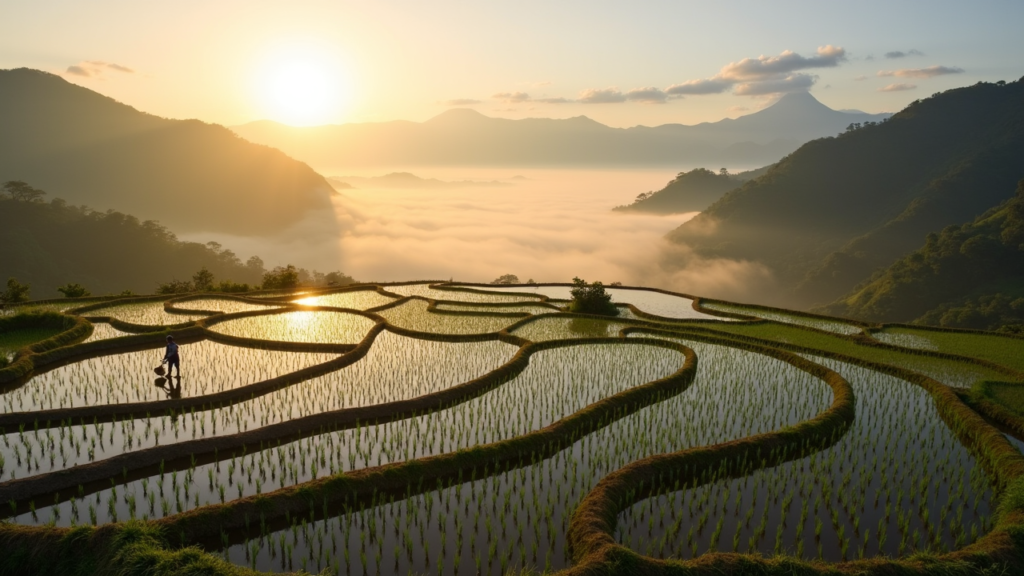
Nestled in the highlands of western Flores, Indonesia, Ruteng stands as one of the island’s most captivating destinations, offering travelers a unique blend of extraordinary agricultural landscapes, rich cultural heritage, and pristine mountain environments. At approximately 1,200 meters above sea level, this cool highland town serves as the gateway to some of Indonesia’s most distinctive natural and cultural attractions, including the famous Lingko spider web rice fields that have become iconic symbols of traditional Manggarai agricultural ingenuity.
Ruteng represents more than just a scenic stopover between Labuan Bajo and Ende—it embodies centuries of indigenous wisdom, sustainable farming practices, and cultural preservation that continue to shape the identity of the Manggarai people. For travelers seeking authentic experiences beyond Indonesia’s typical beach destinations, Ruteng offers highland adventures that combine spectacular landscapes with meaningful cultural encounters.
Lingko Spider Web Fields: Agricultural Artistry
The Lingko spider web rice fields stand as Ruteng’s most distinctive attraction and represent a remarkable example of traditional land management that has been practiced by the Manggarai people for generations. These circular or semi-circular rice fields are divided into triangular plots radiating from a central point, creating patterns that resemble intricate spider webs when viewed from elevated vantage points.
The Lingko system is far more than an aesthetic curiosity—it represents a sophisticated approach to communal land distribution and agricultural cooperation. Each family within a traditional community receives a wedge-shaped plot extending from the center to the perimeter, ensuring equitable access to both the fertile central areas and the outer boundaries. This system promotes social cohesion and prevents land disputes while maintaining agricultural productivity across generations.
Several Lingko sites around Ruteng offer excellent viewing opportunities, with Cancar being the most accessible and photographically rewarding location. The fields are most visually striking during the planting season (typically November to January) when the terraces are flooded and reflect the sky, and during harvest time (April to May) when the golden rice creates stunning color contrasts. Early morning visits provide the best lighting conditions and often feature atmospheric mist rolling through the valleys.
Todo Traditional Village: Living Cultural Heritage
Located approximately 5 kilometers from Ruteng town center, Todo Traditional Village (Kampung Todo) offers visitors an immersive experience of Manggarai cultural traditions and architectural heritage. This well-preserved village features traditional cone-shaped houses called Mbaru Niang, which are constructed using bamboo, wood, and thatched roofs following centuries-old building techniques.
The village layout follows traditional Manggarai spatial organization, with houses arranged around a central ceremonial area. The distinctive multi-level houses serve specific functions: the ground level traditionally housed livestock, the middle level served as living quarters, and the upper level stored food and seeds. This vertical organization reflected both practical considerations and spiritual beliefs about the relationship between humans, animals, and the heavens.
Visitors to Todo can observe traditional weaving demonstrations, learn about customary ceremonies, and engage with community members who maintain their ancestral practices while adapting to contemporary life. The village has developed community-based tourism initiatives that provide income for residents while preserving cultural authenticity. Respectful visitors who engage with local guides gain deeper insights into Manggarai cosmology, social structures, and the challenges of cultural preservation in modern Indonesia.
Ruteng Pu Temple: Spiritual Landmark
Ruteng Pu, a Catholic seminary and retreat center, occupies a prominent hilltop position overlooking Ruteng town and the surrounding highlands. While primarily a religious institution, the site has become a popular viewpoint for visitors seeking panoramic vistas of the Ruteng plateau, rice fields, and distant volcanic peaks.
The temple complex reflects the strong Catholic presence in Flores, where Portuguese colonial influence and missionary activity created one of Indonesia’s few predominantly Christian regions. The architecture blends European religious design with local materials and aesthetic sensibilities, creating a distinctive regional style.
Beyond its religious significance, Ruteng Pu serves as an excellent orientation point for understanding the region’s geography. From this elevated position, visitors can appreciate the scale of the highland plateau, identify various Lingko fields in the distance, and observe how traditional villages integrate with the mountainous terrain. Sunset visits are particularly rewarding, as the fading light illuminates the valleys and creates dramatic atmospheric conditions.
Highland Trekking: Mountain Adventures
Ruteng’s highland location provides exceptional opportunities for trekking and nature exploration. The surrounding mountains, including Gunung Ranaka (an extinct volcano), offer trails ranging from gentle walks through rice terraces to challenging summit climbs that reward hikers with spectacular views across western Flores.
The cool climate at Ruteng’s elevation makes trekking more comfortable than in lowland areas, though visitors should prepare for temperature variations and occasional rain, particularly during the wet season (November to March). The landscape features a diverse mix of agricultural areas, pine forests, and remnant natural vegetation that supports various bird species and other wildlife.
Popular trekking routes include walks connecting traditional villages, allowing hikers to experience rural Manggarai life while traversing scenic countryside. Local guides enhance these experiences by explaining agricultural practices, identifying medicinal plants, and sharing stories about the cultural significance of landscape features. Multi-day treks can be arranged for adventurous travelers wanting to explore more remote areas and stay in village homestays.
The highland environment also supports unique ecosystems found nowhere else in Flores. Birdwatchers particularly appreciate the opportunities to observe endemic species, while the cooler temperatures support vegetation types distinct from the lowland forests found elsewhere on the island.

Featured Adventure & Nature Activities Listings


Local Cuisine: Highland Flavors
Ruteng’s culinary scene reflects both its highland environment and Manggarai cultural traditions. The cooler climate supports crops uncommon in lowland Indonesia, including various vegetables, coffee, and cacao that thrive at higher elevations. Local markets showcase this agricultural diversity, offering fresh produce and providing insights into daily life in this highland community.
Traditional Manggarai dishes feature locally grown ingredients prepared using time-honored methods. Visitors should seek opportunities to try authentic preparations, which often include rice (the staple crop visible in the Lingko fields), locally raised pork and chicken, and vegetables grown in highland gardens. Coffee cultivation has become increasingly important to the local economy, with Flores coffee gaining recognition among specialty coffee enthusiasts for its distinctive flavor profiles.
Small warungs (local eateries) and the central market area offer the most authentic culinary experiences, though visitors should be prepared for simple preparations and limited English communication. Some guesthouses and homestays provide opportunities to participate in meal preparation, offering hands-on cultural exchange and deeper appreciation for local foodways.
Photography Guide: Capturing Ruteng’s Beauty
Ruteng presents exceptional photographic opportunities, from the geometric patterns of Lingko fields to cultural portraits and dramatic highland landscapes. Successful photography in this region requires understanding both technical considerations and cultural sensitivities.
For landscape photography, the Lingko fields are most photogenic during early morning hours when soft light enhances textures and mist often adds atmospheric depth. The elevated viewpoints at Cancar and other locations allow photographers to capture the full spider web patterns. A moderate telephoto lens (70-200mm range) helps compress the landscape and emphasize the geometric patterns, while wide-angle lenses capture the broader context of fields within the mountain landscape.
Cultural photography in traditional villages requires respectful engagement and often permission from community leaders or individual subjects. Many villages have established photography fees that support community development, and visitors should honor these arrangements. Taking time to interact with people before photographing creates better portraits and more meaningful exchanges.
The highland light can be challenging, with bright midday sun creating harsh contrasts. Overcast conditions, common in Ruteng, actually benefit photography by providing even lighting that reveals details and colors without extreme shadows. Sunset and sunrise offer dramatic lighting opportunities, particularly for silhouettes and atmospheric shots of the highland landscape.
Why Ruteng Matters: Cultural and Economic Significance
Ruteng’s importance extends beyond its appeal to travelers. The region represents a living laboratory of sustainable agricultural practices, with the Lingko system demonstrating how traditional knowledge can maintain productivity while preserving social cohesion. As Indonesia faces challenges related to food security and rural development, understanding and supporting such traditional systems becomes increasingly relevant.
For the local economy, tourism provides crucial supplementary income for communities that primarily depend on agriculture. The development of community-based tourism initiatives in villages like Todo creates economic incentives for cultural preservation while providing employment opportunities that help stem rural-to-urban migration. However, this tourism development must be carefully managed to prevent cultural commodification and ensure that benefits reach local communities rather than external operators.
From a traveler’s perspective, Ruteng offers experiences that contrast sharply with Indonesia’s more developed tourist destinations. The region provides opportunities for meaningful cultural exchange, supports local communities through responsible tourism spending, and showcases landscapes and traditions found nowhere else in the archipelago. As travelers increasingly seek authentic experiences and sustainable tourism options, destinations like Ruteng become more valuable.
Planning Considerations and What to Watch
Visiting Ruteng requires more planning than trips to established tourist centers like Bali or Labuan Bajo. The town has limited accommodation options, mostly consisting of simple guesthouses and a few mid-range hotels. Transportation connections include regular buses from Labuan Bajo (approximately 4-5 hours) and Ende, though road conditions can affect travel times, particularly during the rainy season.
The best visiting period typically falls during the dry season (April to October), though the shoulder months of April-May coincide with harvest time in the Lingko fields, offering particularly photogenic conditions. Travelers should prepare for cool temperatures, especially in the mornings and evenings, and pack accordingly with layers and rain protection.
Looking ahead, several factors will shape Ruteng’s tourism development. Infrastructure improvements, including road upgrades and potential airport expansion, may increase accessibility and visitor numbers. This growth presents both opportunities and challenges—while increased tourism can boost local incomes, it also risks overwhelming communities and degrading the authentic experiences that make Ruteng special.
The preservation of traditional practices, particularly the Lingko agricultural system, faces pressure from modernization and changing economic conditions. Younger generations may be less inclined to maintain labor-intensive traditional farming methods, potentially threatening these distinctive landscapes. Tourism that values and supports these traditions can provide economic justification for their continuation, but only if developed thoughtfully with community leadership.
Climate change poses another consideration, as shifting rainfall patterns and temperature changes could affect highland agriculture and the ecosystems that support the region’s biodiversity. Monitoring these environmental changes and supporting adaptive strategies will be crucial for Ruteng’s long-term sustainability.
For travelers planning to visit Ruteng, the key is approaching the destination with appropriate expectations and respect. This is not a place for luxury amenities or highly organized tours, but rather an opportunity to experience authentic highland culture, witness remarkable agricultural landscapes, and support communities maintaining their traditions in the face of rapid change. Those who visit with patience, cultural sensitivity, and genuine curiosity will find Ruteng to be one of Flores’ most rewarding destinations.
Common Questions About Visiting Ruteng and Its Spider Web Rice Fields
1. What are the Lingko spider web rice fields and why are they significant?
The Lingko fields are circular or semi-circular rice terraces divided into triangular wedge-shaped plots that radiate from a central point, creating spider web patterns visible from elevated viewpoints. This traditional Manggarai land management system ensures equitable distribution among families while promoting social cohesion and sustainable agriculture that has been practiced for generations.
2. When is the best time to visit Ruteng to see the Lingko fields?
The most visually striking periods are during planting season (November to January) when flooded terraces reflect the sky, and harvest time (April to May) when golden rice creates stunning contrasts. Early morning visits during the dry season (April to October) offer the best lighting conditions and atmospheric mist, though the region can be visited year-round.
3. What cultural experiences can visitors have in Ruteng beyond the rice fields?
Visitors can explore Todo Traditional Village to see cone-shaped Mbaru Niang houses, observe traditional weaving demonstrations, and learn about Manggarai customs and ceremonies. The region also offers opportunities for highland trekking through traditional villages, engaging with local communities, and experiencing authentic Manggarai cuisine and coffee culture.
4. How do I get to Ruteng and what accommodation options are available?
Ruteng is accessible by regular buses from Labuan Bajo (4-5 hours) and Ende, though road conditions vary seasonally. Accommodation consists mainly of simple guesthouses and a few mid-range hotels. The town requires more planning than established tourist centers, with limited English communication and basic amenities reflecting its authentic highland character.
5. How does visiting Ruteng support local communities and cultural preservation?
Tourism provides crucial supplementary income for agricultural communities and creates economic incentives for maintaining traditional practices like the Lingko system. Community-based tourism initiatives in villages like Todo ensure benefits reach local residents while supporting cultural preservation, though visitors should approach with respect and appropriate expectations for this authentic highland destination.

Author: Flores Insider
Welcome to Discover Flores — your trusted guide to exploring Indonesia’s untamed island paradise. From Komodo National Park and Kelimutu’s tri-colored lakes to hidden beaches, dive spots, and Labuan Bajo real estate opportunities, Discover Flores brings you the best of travel, lifestyle, and investment across the island. Plan your next adventure, find the top tours and accommodations, and uncover why Flores is Indonesia’s rising gem for eco-tourism, digital nomads, and sustainable travel.


One response to “Ruteng: Spider Web Rice Fields and Highland Adventures in Flores”
[…] for bird watching, each providing access to different habitat types and species assemblages. The montane forests surrounding Ruteng, in the island’s western highlands, represent prime territory for endemic forest species. These […]