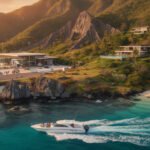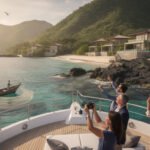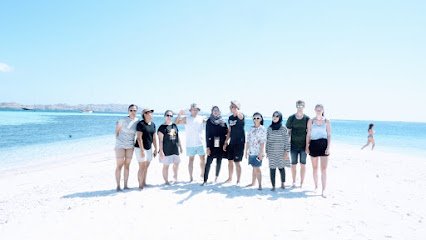
A Flores liveaboard changes the terms of the dive trip completely.
Day trips from Labuan Bajo are good. They cover the signature sites — Manta Point, Batu Bolong, Pink Beach — and most visitors leave satisfied. But the experience has constraints that a day boat cannot solve: you arrive at popular sites mid-morning when other boats are already there, you turn back by late afternoon regardless of conditions, and every night you are back in a hotel room in town rather than anchored in a bay that has no other boats in it.
A Flores liveaboard removes those constraints. You dive Manta Point at dawn before the first day-trip boat rounds the headland. You reach Cannibal Rock and the southern Rinca sites that day boats rarely visit. You sleep to the sound of water against the hull in a bay that is yours alone for the night. And you cover more diving in four days than most day-trip visitors manage in two weeks.
This guide covers everything about the Flores liveaboard experience: the routes, the dive sites, the operators, what to expect on board, the costs, and when to go.
Flores Liveaboard vs Day Trips: The Key Differences
| Day trip | Flores liveaboard | |
|---|---|---|
| Departure | 6:30–7:30am from Labuan Bajo harbour | Depart the previous afternoon |
| Sites per day | 2–3 snorkel/dive stops | 3–5 dives per day |
| Site timing | Arrive mid-morning with other boats | First in at dawn at major sites |
| Remote sites | Limited — Cannibal Rock, GPS Point rarely included | Full access to all Komodo sites |
| Night dives | Not possible | Available at selected sites |
| Return | Back in Labuan Bajo by 5pm | Final morning back in Labuan Bajo |
| Cost | IDR 800,000–2,000,000/person/day | IDR 2,500,000–8,000,000+/person/day (all-inclusive) |
The Flores liveaboard is not a luxury upgrade of the day trip — it is a fundamentally different product. For serious divers, underwater photographers, and anyone who wants to see the full range of Komodo National Park’s marine environments, a liveaboard is the only way to do it properly.
Flores Liveaboard Routes
2–3 Night: North Komodo Circuit
The entry-level Flores liveaboard itinerary covers the northern Komodo sites in a tight loop from Labuan Bajo. Typical dive sites: Batu Bolong, Crystal Rock, Castle Rock, Tatawa Besar, and Manta Point. Usually includes a morning Komodo or Rinca dragon trek.
Who it’s for: Divers who want to experience liveaboard but have limited days. Good for those adding a liveaboard onto a longer Flores land trip.
Dives: 8–12 total
Cost: IDR 5,000,000–12,000,000 per person
4–5 Night: Full Komodo Loop
The most popular Flores liveaboard format. Covers north and south Komodo, including the southern sites (Cannibal Rock, Yellow Wall, GPS Point) that shorter trips miss. Typically includes a dragon trek, Siaba Besar turtles, Pink Beach, and 3–4 dives per day at the best sites.
Who it’s for: The ideal entry point for a proper Flores liveaboard experience. Covers everything worth seeing.
Dives: 14–20 total
Cost: IDR 9,000,000–22,000,000 per person
7+ Night: Extended Komodo to Sumbawa
The full itinerary extends west from Komodo to Sumbawa (or east toward Alor and Flores proper), covering sites beyond the National Park. Some operators run one-way routes: Labuan Bajo to Lombok, or reverse. Adds macro dive sites in the Sumbawa passage and potentially whale shark territory near Teluk Saleh.
Who it’s for: Dedicated divers, underwater photographers, and those combining a Flores liveaboard with onward island travel.
Dives: 25–35 total
Cost: IDR 18,000,000–40,000,000+ per person
Best Flores Liveaboard Dive Sites
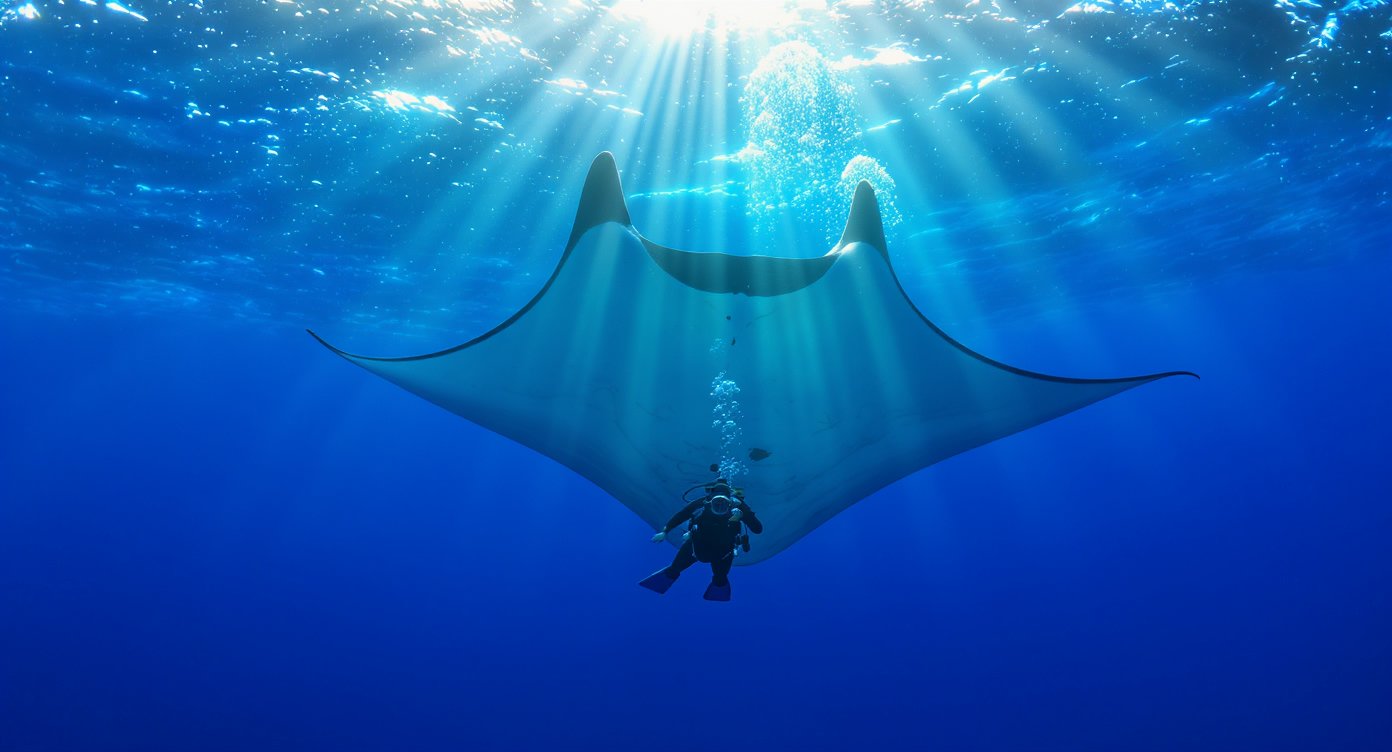
Manta Point (Karang Makassar)
The signature site of any Flores liveaboard. Manta Point is a shallow cleaning station in the channel between Komodo and Rinca islands where oceanic manta rays (Mobula birostris) circle to have parasites removed by cleaner wrasse. The standard experience — hovering at 10–15 metres watching mantas drift overhead with 3–4 metre wingspans — is one of the most reliable large-animal encounters in diving.
On a Flores liveaboard, you dive Manta Point at dawn, before the current has fully built and before day boats arrive. The contrast with a midday day-trip visit is significant: calm water, no crowd, and mantas undisturbed. Peak season: June–November, with July–September producing the most consistent multi-manta aggregations.
Batu Bolong
A submerged pinnacle in the channel between Komodo and Tatawa Besar, Batu Bolong is consistently ranked among the top 10 dive sites in the world for fish density. The pinnacle rises from 40+ metres to just below the surface; the current funnelled around it concentrates marine life into a column of extraordinary richness.
At depth: white-tip reef sharks in the sandy channel, Napoleon wrasse circling the pinnacle top, and enormous schools of fusiliers and anthias covering every surface of the reef. From the shallows: hundreds of thousands of orange and yellow anthias in a moving wall above the coral.
Conditions: Strong current required for the fish aggregation — this is not a beginner site. Liveaboards time dives for the right tidal window. Day boats often arrive when conditions are unfavourable; a Flores liveaboard overnight nearby dives at the optimal moment.
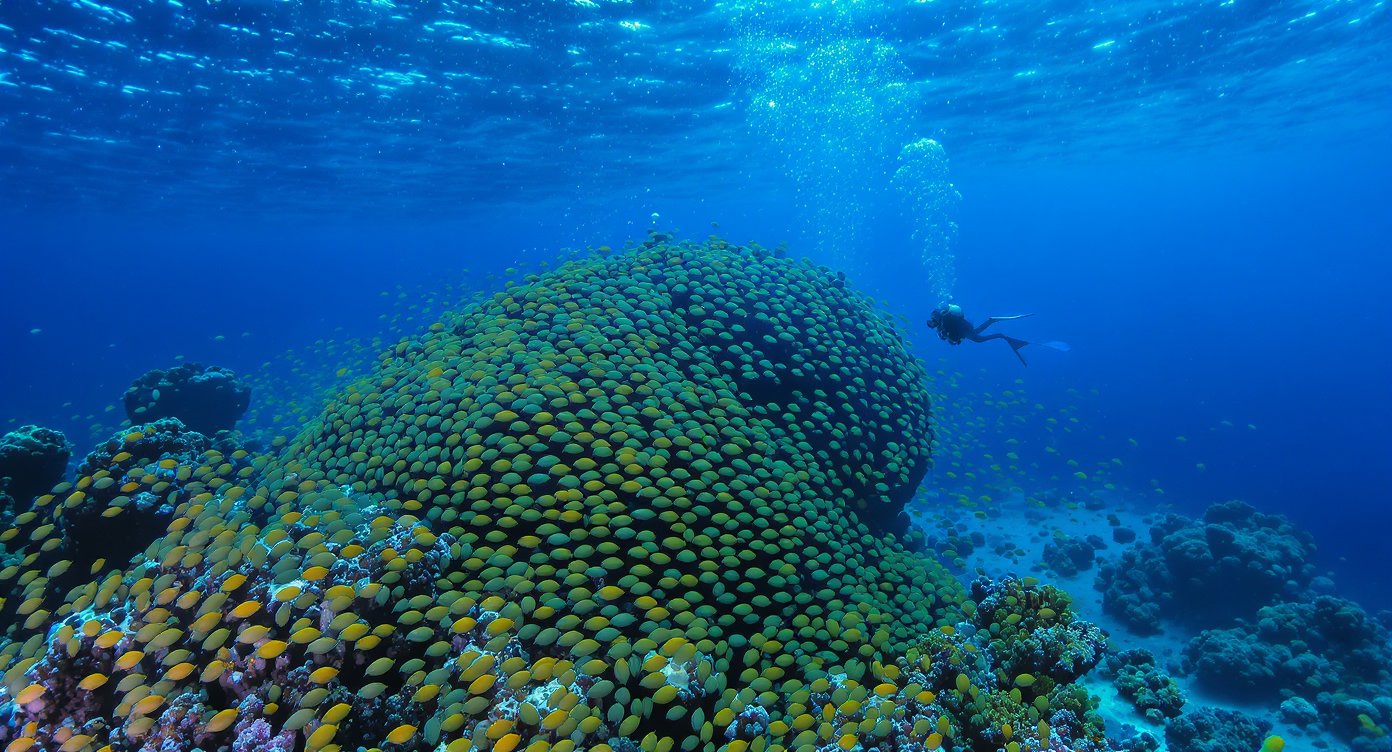
Crystal Rock & Castle Rock
Two exposed rocks north of Gili Lawa Darat near the northern tip of Komodo Island. Both sites have strong current, dramatic topography, and large-animal encounters: grey reef sharks in the channel, giant trevally hunting in formation, and at Castle Rock specifically — one of the best sites in Flores for schooling hammerhead sharks in the right season (July–October).
These sites are consistently covered on Flores liveaboard itineraries but are rarely reached by day boats from Labuan Bajo due to the travel distance and limited time window for the correct current.
Cannibal Rock (Rinca)
One of the most visually extraordinary dive sites in the Flores liveaboard circuit, and among the most undervisited because of its location in the southern Rinca passage. The site is a tumbling reef of soft coral — dense fields of yellow, pink, and orange sea fans, nudibranch in colours that look digitally enhanced, and an absurd density of macro life: pygmy seahorses (Hippocampus bargibanti) in the sea fans, frogfish on the reef rubble, ghost pipefish in the fan coral.
For underwater photographers, Cannibal Rock is the defining site of a Flores liveaboard. It is reached only by staying overnight in the southern Rinca bay — inaccessible on a standard day trip.
Yellow Wall (GPS Point)
A steep wall dive in the southern Komodo passage with exceptional soft coral coverage and strong current that brings large pelagics: oceanic manta rays, whale sharks (seasonal), and tuna. The wall’s colours — yellow sea fans and orange cup corals at depth, transitioning to pink and purple soft corals toward the top — make it a photographer’s site even without the large-animal encounters.
Siaba Besar — Turtle Cleaning Station
Not a dramatic current site — a gentle, shallow reef where green sea turtles (Chelonia mydas) rest, graze, and return repeatedly to specific coral heads for cleaning. On a Flores liveaboard, Siaba Besar is typically a morning dive after a night anchored nearby: calm, unhurried, and reliably beautiful. Turtles at 5–8 metres in crystal visibility make for some of the best underwater photography of any site in the circuit.
What You’ll See Month by Month
| Month | Highlight |
|---|---|
| April–May | Dive season opening — clear water, mantas building |
| June | Manta aggregations begin at Manta Point, visibility peak |
| July–September | Best overall: mantas consistent, hammerheads at Crystal Rock, visibility 20–30m |
| October | Excellent conditions; whale sharks pass through |
| November | Late season — mantas still present, conditions beginning to shift |
| December–March | Wet season — most Flores liveaboard operators suspend or reduce schedules |
July and August are peak season for both marine life encounters and booking demand on Flores liveaboard departures. Book 2–3 months ahead for these months.
Types of Flores Liveaboard Boats
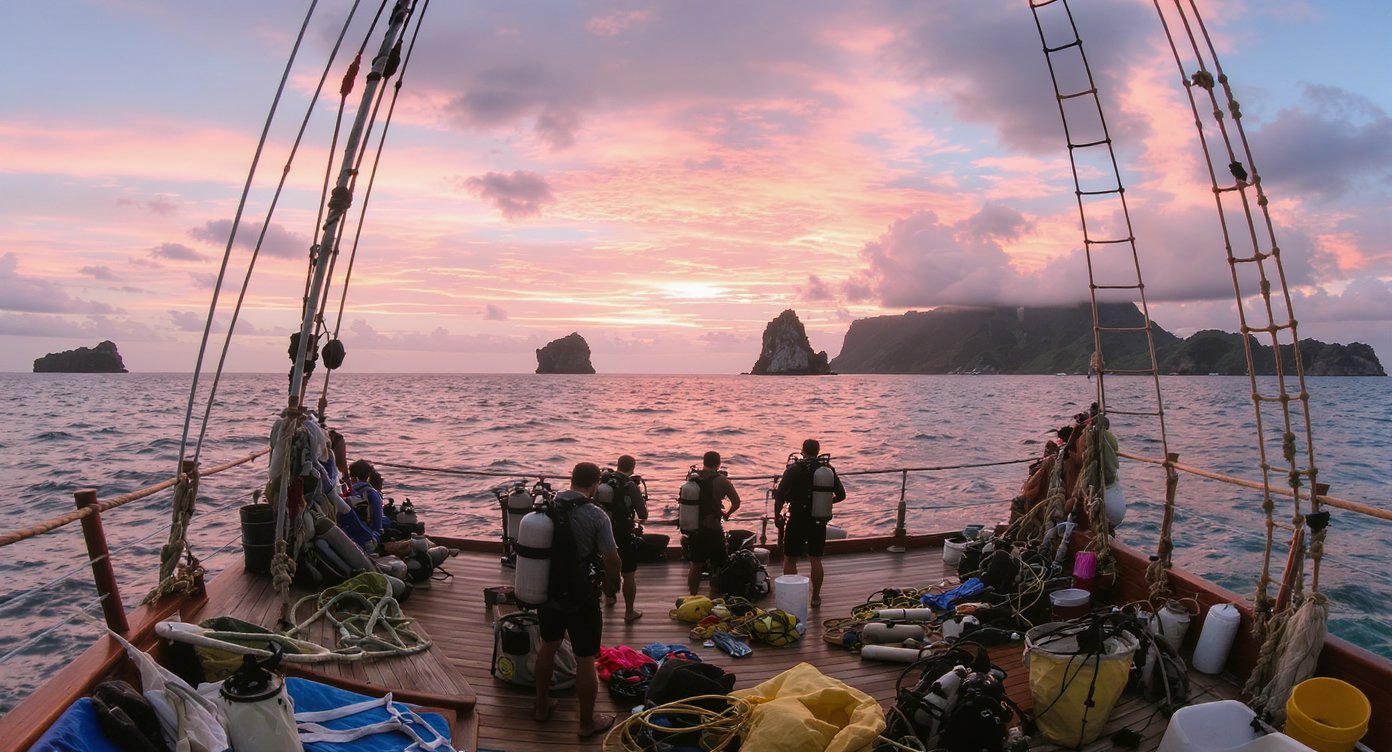
Budget Wooden Boats
Smaller traditional wooden boats converted for dive passengers. Basic cabin space, limited hot water, simpler meals. The diving is identical — the boat comfort is not. Budget Flores liveaboard trips run IDR 2,500,000–4,000,000 per person per day.
Who it suits: Experienced divers who prioritise dive time over cabin comfort. Solo travellers on tight budgets.
Mid-Range Phinisi
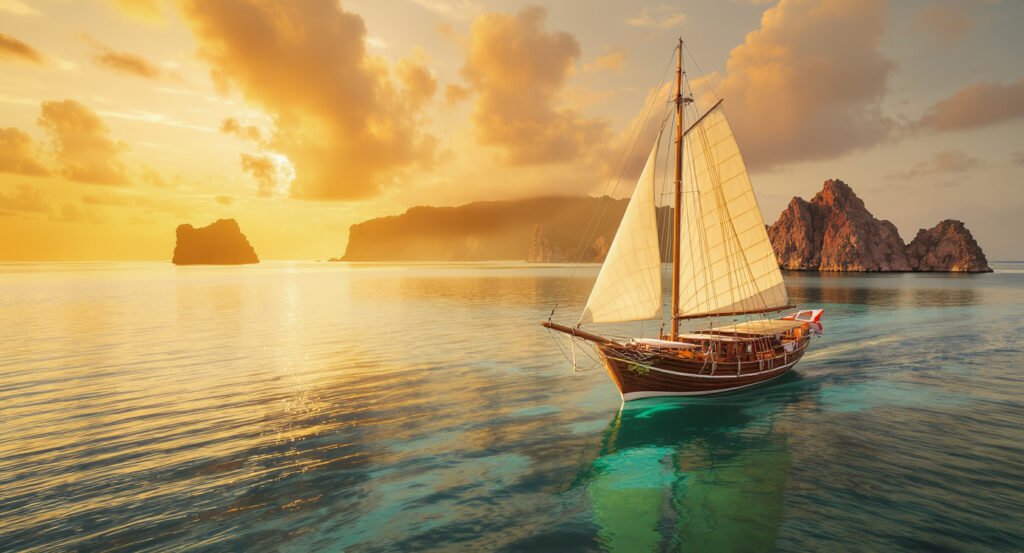
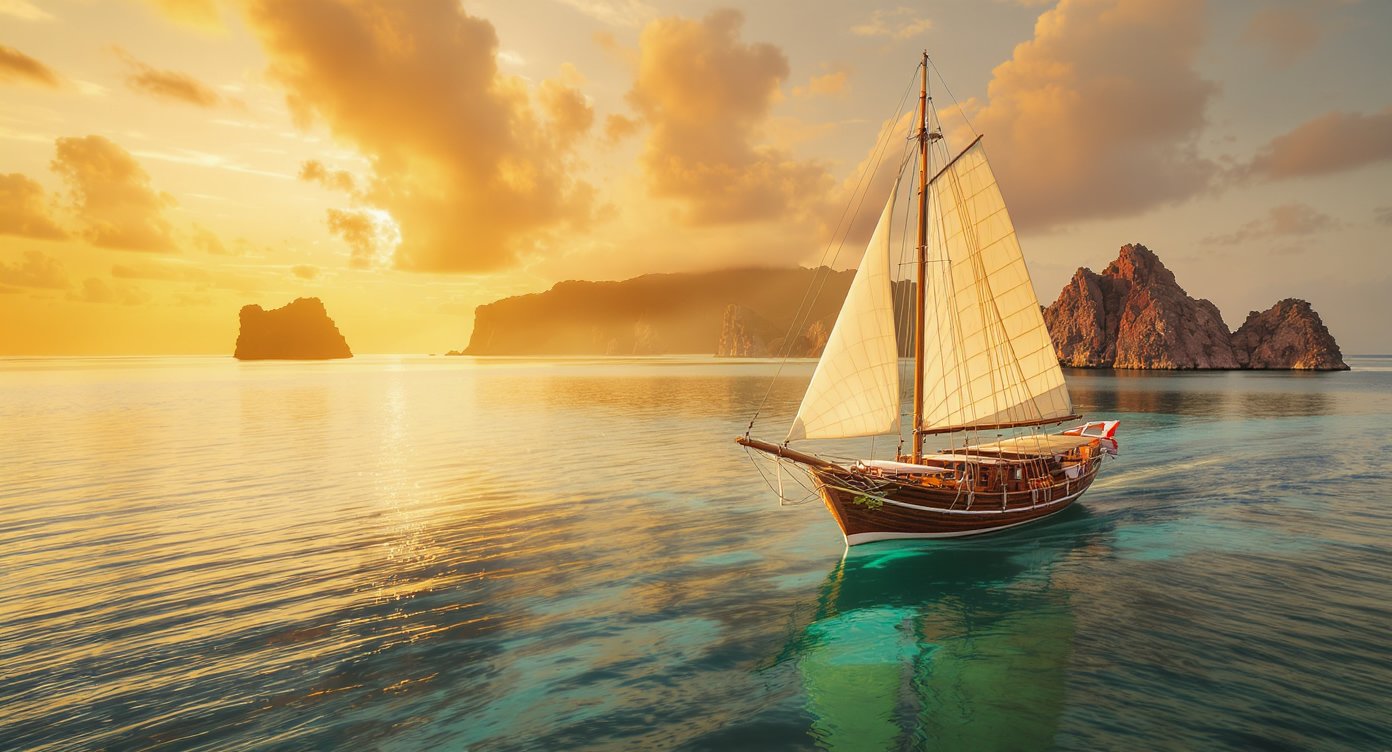
The traditional Indonesian phinisi sailing vessel — two-masted, large deck space, multiple cabin levels — is the standard Flores liveaboard vessel. Mid-range phinisi typically carry 8–16 passengers with en-suite cabins, air conditioning, proper dive decks with tanks and BCs, and better food than the budget wooden boats.
Who it suits: The right choice for most divers. Good comfort without luxury pricing.
Luxury Phinisi
Higher-specification phinisi with larger cabins, better galley, faster tenders, and more attentive dive guiding. Some include underwater photography stations, Nitrox fills, and rebreather support. Luxury Flores liveaboard trips run IDR 6,000,000–10,000,000+ per person per day.
Who it suits: Underwater photographers, couples, those for whom on-board comfort is as important as the diving.
Flores Liveaboard Operators in Our Directory
These operators are listed in the Discover Flores directory and run liveaboard departures from Labuan Bajo:
Wunderpus Liveaboard — A dedicated Flores liveaboard operator running dive-focused itineraries through Komodo National Park. Well-regarded for dive guide quality and site selection.
Mikumba Diving — Liveaboard and day-dive operator with a focus on smaller group sizes, good for photographers who want more personal guiding.
Komodo Adventure Dive Travel — Adventure-oriented liveaboard operator covering both standard Komodo circuits and extended itineraries.
Komodopremium Labuan Bajo — Operates premium charter liveaboards with private departure options, good for groups.
Bajo Dive Club — An established dive centre and liveaboard base, one of the longest-running operations in Labuan Bajo.
Red Whale Dive Komodo — Offers both day diving and liveaboard packages, with strong guided dive instruction for those looking to combine skills development with the Flores liveaboard experience.
Maika Komodo Tour & Diving — Komodo dive and liveaboard packages combining dragon trekking with multi-day dive itineraries.
Browse the full Labuan Bajo diving and liveaboard directory for the complete current operator list.
What to Expect on a Flores Liveaboard
A typical day:
- 5:30am — First dive briefing. Dawn dive at the day’s signature site (Manta Point, Batu Bolong) before other boats arrive
- 7:00am — Breakfast on deck. Boat repositions to second site while you eat
- 9:00am — Second dive
- 11:30am — Surface interval lunch, boat moves to afternoon position
- 1:30pm — Third dive
- 3:30pm — Optional fourth dive or snorkel
- 5:30pm — Sunset from the deck, anchored for the night
- 7:00pm — Dinner, dive briefing for the next day
- 8:30pm — Optional night dive (site-dependent)
Meals: All included. Indonesian and Western food. Quality varies significantly by operator — check reviews specifically for food. Budget boats offer simpler Indonesian meals; luxury phinisi often have proper galley kitchens with daily-changing menus.
Nitrox: Available on most mid-range and luxury Flores liveaboard boats. Confirm when booking. Nitrox extends bottom time at Batu Bolong (16m, 30m profiles) and is worth it for multi-dive days.
Equipment: Most Flores liveaboard operators provide tanks and weight belts. BCD and regulator hire is typically extra. Bring your own wetsuit (3mm for Komodo — thermocline currents can bring cold water from depth without warning), computer, and mask.
Cost Breakdown: Flores Liveaboard 2026
| Category | Budget | Mid-Range | Luxury |
|---|---|---|---|
| Boat per night | IDR 2,500,000–4,000,000 | IDR 4,500,000–7,000,000 | IDR 7,000,000–10,000,000+ |
| Komodo park fee | ~IDR 350,000/day | Same | Same |
| Nitrox upgrade | +IDR 150,000/dive | +IDR 150,000/dive | Often included |
| Equipment hire | +IDR 200,000–400,000/day | +IDR 200,000/day | Often included |
| Ranger fees | Included in park fee | Same | Same |
4-night all-in estimate: IDR 12,000,000–15,000,000 (mid-range) per person, or approximately AUD 1,100–1,400. This covers accommodation, all meals, 3–4 dives per day, Komodo National Park entrance, and one Komodo dragon trek.
Best Time for a Flores Liveaboard
April–November is the Flores liveaboard operating season. The dry season brings optimal visibility (often 20–30 metres), manageable current patterns at the signature sites, and the marine life aggregations the region is known for.
July–September is the peak of the peak: manta rays at Manta Point in highest numbers, hammerhead sightings at Crystal Rock most likely, water temperature stable at 26–29°C, and visibility at its best. This is when the Flores liveaboard experience delivers everything the brochure promises.
April–June and October–November are shoulder periods: excellent conditions, fewer competing boats at the sites, and trip costs that are often 10–15% lower than peak season.
December–March (wet season): Most Flores liveaboard operators suspend departures or run significantly reduced schedules. Conditions are genuinely difficult — strong current variation, reduced visibility, and weather that makes open-water liveaboard sailing uncomfortable. Not recommended.
For more on Flores seasonal patterns, see the Best Time to Visit Flores guide.
Booking Tips
Book 2–3 months ahead for July–August. Flores liveaboard berths — particularly on quality mid-range and luxury phinisi — sell out well in advance during peak season. Unlike hotel rooms, liveaboards cannot add capacity; when the boat is full, it is full.
Travel as a group if possible. Most Flores liveaboard operators offer private charter pricing for groups of 6–10. A private charter gives you full control over the itinerary, dive site selection, and schedule. For groups of 8+, private charter can cost the same per person as joining a shared departure.
Confirm diver certification requirements. All Flores liveaboard operators require Open Water certification minimum. Many of the advanced sites (Batu Bolong, Crystal Rock in strong current) benefit significantly from Advanced Open Water or higher.
Ask about the dive guide-to-diver ratio. Quality Flores liveaboard operators maintain 1:4 or 1:6 guide-to-diver ratios at current-heavy sites. Higher ratios (1:8, 1:10+) compromise safety at Batu Bolong and Crystal Rock where conditions can change quickly.
Check what’s included in the price. The stated Flores liveaboard price rarely includes: Komodo National Park entrance fees (IDR 350,000/day), equipment hire, Nitrox fills, soft drinks and alcohol, airport transfers, and operator tips. Get a full inclusions list before paying a deposit.
Frequently Asked Questions
Do I need to be an experienced diver for a Flores liveaboard?
Open Water certification is the minimum. The Flores liveaboard experience is not beginner diving — the signature sites involve significant current. Advanced Open Water or 50+ logged dives is recommended. If you’re new to diving, Labuan Bajo has excellent shore-based dive centres for skills development before a liveaboard.
What certification do I need?
Open Water minimum; Advanced Open Water strongly recommended. Some operators require Advanced certification for certain sites (Batu Bolong in strong current, night dives). Confirm the requirement for your specific itinerary before booking.
Is a Flores liveaboard worth it over day trips?
For divers, yes — unambiguously. The dawn access to Manta Point, the site coverage including Cannibal Rock and Yellow Wall, and the dive density (15–20 dives in four days vs 6–8 on day trips) makes a Flores liveaboard a fundamentally different product. For snorkellers and non-divers, day trips cover most of what matters. See the Flores Snorkelling Guide for the surface-level experience.
Can non-divers join a Flores liveaboard?
Some operators accept snorkellers on Flores liveaboard departures — typically at a reduced rate. Manta Point, Siaba Besar, and Pink Beach are all excellent snorkel sites. Cannibal Rock and Yellow Wall are less relevant from the surface. Confirm with your operator whether non-diver berths are available.
How rough does it get on a liveaboard?
In peak season (July–September), the open-water crossings between sites are typically manageable. The Komodo channel itself is often calm when anchored overnight. The passages between the outer islands can be rougher. Motion sickness tablets are recommended for anyone prone to seasickness.
Is Flores or Komodo a better liveaboard destination than the Maldives or Red Sea?
Flores liveaboard diving is exceptional but different from those destinations. Komodo offers better large-animal density (mantas, sharks) and reef fish volume than most Red Sea sites, but stronger current and less predictable conditions than the Maldives. The macro life at Cannibal Rock rivals anything in the Indo-Pacific. Experienced divers who have dived both typically place the Flores liveaboard among their top five destinations globally.
The Flores liveaboard is not a day trip extended into a week. It is access to a marine environment — timed correctly, in a remote bay, with no other boats — that delivers encounters that are simply not available any other way.
Browse our Labuan Bajo diving directory to compare operators, read the Flores Snorkelling Guide if you want the surface-level version of the same sites, and plan your wider trip with the Labuan Bajo Travel Guide and the How to Get to Flores guide for arrival logistics.

Author: Flores Insider
Welcome to Discover Flores — your trusted guide to exploring Indonesia’s untamed island paradise. From Komodo National Park and Kelimutu’s tri-colored lakes to hidden beaches, dive spots, and Labuan Bajo real estate opportunities, Discover Flores brings you the best of travel, lifestyle, and investment across the island. Plan your next adventure, find the top tours and accommodations, and uncover why Flores is Indonesia’s rising gem for eco-tourism, digital nomads, and sustainable travel.